


Competitor influencer analysis helps you understand your competitors’ influencer strategies, revealing what works and what doesn’t. By studying their partnerships, engagement metrics, and audience reactions, you can refine your approach and identify opportunities to stand out.
Key Takeaways:
- The influencer marketing industry was valued at $17.40 billion in 2023 and is projected to reach $71 billion by 2032.
- 59% of marketers planned to increase influencer budgets by 2025, making competitive insights more critical than ever.
- Tools like Sprout Social, Brandwatch, and HypeAuditor simplify tracking competitor campaigns and analyzing their effectiveness.
Steps to Analyze Competitor Influencers:
- Find Competitor Partnerships: Use hashtags, social media searches, and tools like the Facebook Ads Library.
- Measure Engagement: Focus on metrics like engagement rates, audience sentiment, and conversion signals.
- Track Results: Use tools to monitor real-time data and identify trends in your competitors’ campaigns.
- Spot Opportunities: Look for gaps in your competitors’ strategies to create your own unique influencer approach.
Competitor analysis isn’t just about tracking – it’s about learning what works and turning insights into actionable strategies for growth. Ready to level up your influencer marketing game?
Boost Your Influencer Marketing Revenue with Market and Competitor Analysis | Webinar
How to Find Competitors’ Influencer Partnerships
To get a clear picture of your competitors’ influencer partnerships, a mix of manual social media searches and automated tracking tools works best. This approach helps you uncover both visible collaborations and behind-the-scenes strategies.
Using Social Media Searches and Hashtags
Start by searching for brand-specific hashtags and disclosure tags on social platforms. Look for terms like #BrandName, #BrandNamePartner, #ad, #sponsored, or #partner. Instagram’s hashtag discovery pages are especially useful – check the "Top Posts" tab to spot high-performing posts and influencer collaborations linked to your industry.
You can also explore competitors’ "Following" lists to identify influencers they work with or might consider partnering with. Instagram’s "Suggested for you" feature on competitor profiles is another great way to find creators who cater to similar audiences. For a deeper dive, search the Facebook Ads Library using competitor names to uncover sponsored content or ads aimed at recruiting brand ambassadors.
Don’t forget to visit competitor websites. Look for sections labeled "Ambassadors", "Affiliates", or "Creators". On Instagram, check Story highlights with titles like "Community", "Ambassadors", or "Partners" for archived influencer collaborations.
While manual searches uncover a lot, pairing them with automated tools can give you a broader and more detailed view.
Using Social Listening Tools
Automated social listening tools take your research to the next level by providing real-time data on sentiment and engagement. While manual methods help you identify influencers, tools like Sprout Social and Brandwatch explain the "why" and "how" behind your competitors’ strategies. These platforms track mentions, sentiment, and engagement across social networks, forums, and review sites, giving you a deeper understanding of audience reactions. For instance, Brandwatch analyzes data from over 100 million online sources and 1.4 trillion posts.
Social listening tools also measure "share of voice", showing how often competitors are mentioned compared to your brand. They even analyze the tone of these mentions to gauge public sentiment about influencer campaigns. If you want to dig even deeper, platforms like Semrush Influencer Analytics can reveal your competitors’ past influencer partnerships, estimated spending, and the brands specific influencers have worked with before. These insights go far beyond what you can gather manually, offering performance metrics that help you refine your own strategy.
Metrics for Measuring Influencer Engagement
Once you’ve identified the influencers your competitors are partnering with, the next step is to measure how impactful these collaborations really are. The right metrics can help you uncover whether an influencer is genuinely connecting with their audience or simply generating surface-level numbers that look good on paper.
Engagement Rate and Post Performance
Engagement rate is one of the most reliable ways to gauge how well content resonates with an audience. To calculate it, divide the total interactions (likes, comments, shares, saves) by total impressions, then multiply by 100. This percentage shows how much of the audience actively engaged with the content instead of just scrolling past.
Here’s a snapshot of platform benchmarks for 2026:
- TikTok: 4–8%
- Instagram Reels: 3–6%
- Instagram Feed: 1–3%
- LinkedIn: 1–2%
When comparing influencers, keep in mind that nano-influencers (10K–100K followers) often achieve engagement rates of 5–15%, while macro-influencers (over 1M followers) typically land between 0.5–2%. Knowing these benchmarks helps you determine whether a competitor’s influencer collaboration is performing above or below par.
Focus on meaningful interactions like comments and shares rather than passive likes. On TikTok, actions like saves and shares are especially valuable since the platform’s algorithm rewards these behaviors with broader content distribution. For video content, metrics like average watch time and completion rate are critical – anything above 50% indicates strong viewer interest. These deeper insights reveal which partnerships spark genuine engagement versus those that just scratch the surface.
Audience Sentiment Analysis
High engagement numbers can sometimes hide problems. For example, a campaign with 10,000 impressions but 40% negative feedback is far from a win. This is where sentiment analysis comes in – it categorizes feedback to show whether a partnership is boosting or damaging brand perception. Reading through actual comments is crucial; one thoughtful comment from a real person carries far more weight than 1,000 likes from bots.
Advanced sentiment tools can even detect emotions like trust, joy, or anticipation. Among these, "trust" is especially valuable, as it shows whether an influencer’s audience genuinely believes in their recommendations. This kind of analysis helps pinpoint which influencers maintain authentic relationships with their followers.
Also, look out for purchase intent signals in the comments – phrases like “I need this” or “Where can I buy?” are clear indicators that an influencer is successfully moving their audience toward action. For instance, Adobe’s B2B LinkedIn campaign focused on form completions rather than likes, leading to double the engagement and a 150% increase in completed forms compared to standard campaigns. Metrics like these highlight which competitor strategies are driving real business outcomes.
Follower Growth and Conversion Signals
Tracking follower growth is another key metric. Organic growth typically hovers around 2–3% per month. However, sudden spikes – like gaining 1,000+ followers overnight – can be a red flag for bot activity rather than genuine audience interest. Additionally, checking follower authenticity is essential. For example, if a U.S.-based influencer has 80% of their followers from a completely unrelated country, it’s a sign that their audience might not be as legitimate as it seems.
Beyond follower growth, direct conversion signals are critical. Tools like unique promo codes and UTM parameters make it easier to track results. For example, Invoice Fly worked with TikTok influencers to target freelancers and achieved 2,000 paying subscribers at a cost of $3.50 per install. This kind of direct attribution shows which influencer partnerships are driving revenue, not just awareness, giving you a clear benchmark to assess your competitors’ ROI and refine your own strategy.
These metrics set the stage for choosing the right tools to track and optimize performance in the next section.
Tools for Tracking Competitor Influencer Activity
Manually keeping tabs on competitor influencer campaigns can be tedious and prone to errors. Thankfully, modern tracking tools take the heavy lifting off your plate by automating data collection. These tools provide real-time insights into engagement rates, posting frequency, and audience sentiment. They also help pinpoint which influencers your competitors are collaborating with, how well those campaigns are doing, and whether it’s worth emulating – or steering clear of – their strategies.
When selecting a tool, think about what you need most. Some platforms shine in cross-platform monitoring, covering Instagram, TikTok, YouTube, Twitch, and X (formerly Twitter). Others specialize in sentiment analysis, using AI to gauge audience reactions. Advanced tools can even differentiate between organic mentions and paid sponsorships, giving you a clearer picture of your competitors’ influencer game plans. For instance, HypeAuditor boasts a database of 219.2 million creators, while Modash offers access to over 250 million influencers in its open-network database.
Another key metric to track is your social share of voice, which measures how often your brand is mentioned compared to competitors. This helps you figure out whether a competitor’s influencer campaigns are sparking meaningful conversations or just surface-level chatter. Tools like Sprinklr, which monitors activity across more than 400,000 profiles, offer a bird’s-eye view of the competitive landscape. These automated insights make it easier to zero in on the right tool for your needs.
Comparison of Popular Tracking Tools
Not all tracking tools are created equal – some focus on platform coverage, others on sentiment analysis or historical data access. Here’s a quick breakdown of popular tools to help you decide:
| Tool | Platform Coverage | Sentiment Analysis | Historical Data Access | Key Feature |
|---|---|---|---|---|
| BuzzSumo | FB, IG, X, YT, TikTok | No | Yes | Analyzes engagement by post length and type; starts at $199/month |
| Social Blade | YT, Twitch, X, IG, FB, TikTok | No | Limited | Provides a "grade" ranking based on engagement and followers; free basic plan, premium starts at $3.99/month |
| SEMrush Social | FB, IG, X, LinkedIn, YT, Pinterest | Yes (Influencer App) | Yes | Tracks competitor spending patterns and brand mentions; $249/month, with Competitor Analysis add-on for $129/month |
| HypeAuditor | IG, TikTok, YT, Twitch, X, Snapchat | Yes | Yes | Competitor leaderboards and market share tracking |
| Mentionlytics | FB, IG, X, YT, Pinterest, Web | Yes | Yes | Monitors mentions across social media, news, and blogs |
When choosing a tool, focus on features that match your objectives. If estimating competitor budgets is your priority, look for platforms offering Earned Media Value (EMV) and CPM estimates. On the other hand, if vetting influencers is your goal, consider tools with audience demographics and Channel Quality Scores to evaluate engagement quality. Using these tools effectively can turn competitor data into actionable insights, giving you a competitive edge. With over 75% of consumers saying social media influences their buying choices, staying on top of competitor activity has never been more critical.
sbb-itb-2ec70df
How to Analyze Influencer Collaborations: A Step-by-Step Process
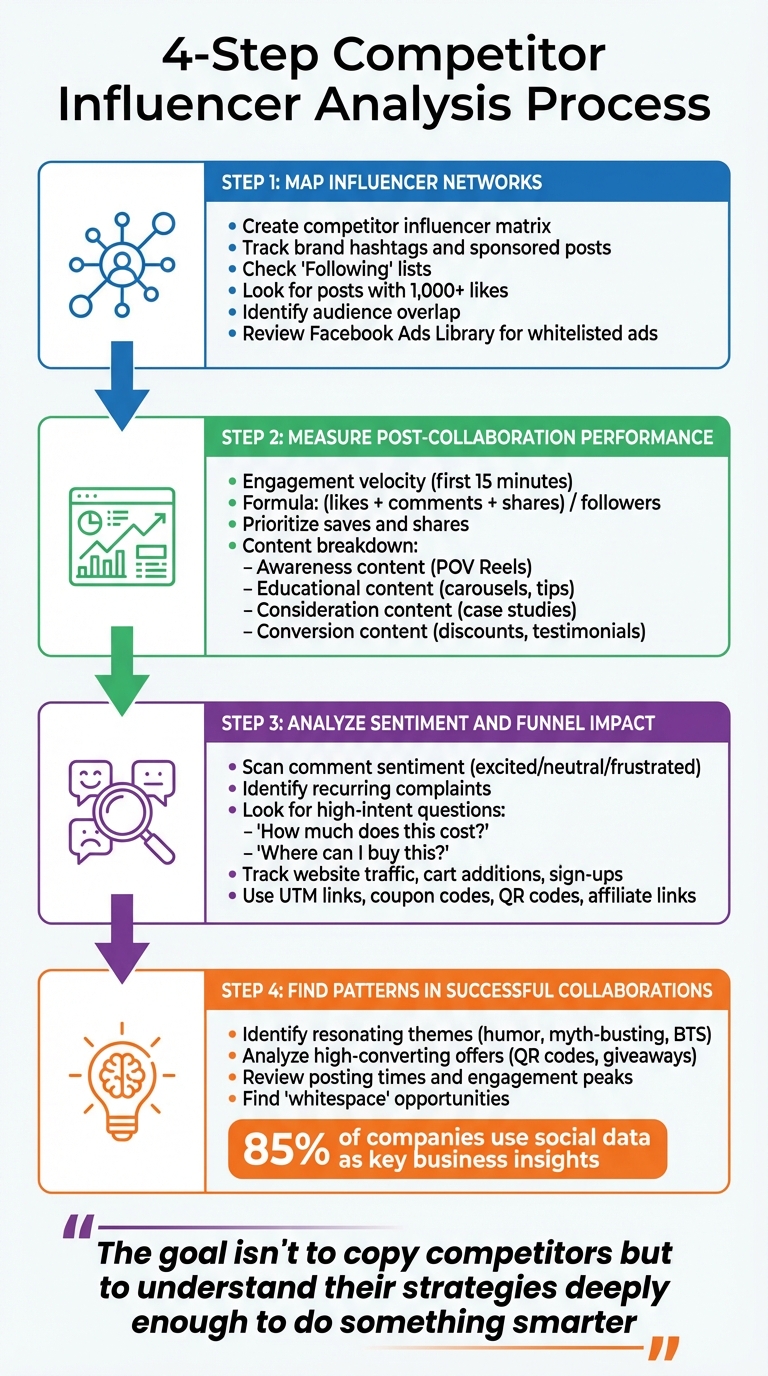
4-Step Competitor Influencer Analysis Process
Turning competitor influencer data into actionable strategies can give your brand a serious edge. By following a structured approach, you can uncover what’s working, what’s not, and where your brand can step in to make an impact.
Step 1: Map Influencer Networks
Start by creating a competitor influencer matrix. This should include each influencer’s name, the type of collaboration they’re involved in (like sponsored posts, takeovers, or ambassador programs), and details about their audience, such as demographics and interests. To identify influencers working with your competitors, look for brand-specific hashtags, posts tagged as "sponsored", and even the "Following" lists of competitor accounts – brands often follow influencers they’re considering for partnerships. Focus on posts with 1,000+ likes or clear sponsorship tags to separate true collaborations from casual mentions.
Also, check for audience overlap. If multiple competitors are working with the same influencer, it’s a sign that the creator has strong influence within your shared target market. Don’t forget to explore the Facebook Ads Library to see if competitors are running "whitelisted" ads – these are ads promoted through an influencer’s account instead of the brand’s. This often indicates a high-trust partnership that’s worth a closer look.
Once your influencer matrix is complete, shift your attention to how these collaborations are performing.
Step 2: Measure Post-Collaboration Performance
With your influencer network mapped, the next step is to evaluate how well these partnerships are engaging audiences. Start by tracking engagement velocity – how quickly likes, comments, and shares roll in after a post goes live. A surge of engagement within the first 15 minutes suggests a highly engaged audience. Use this formula to calculate engagement rates: (likes + comments + shares) / followers. However, prioritize metrics like saves and shares, as they often indicate deeper audience interest and long-term relevance.
Break down the content by its purpose in the customer journey. For example:
- Awareness content (like POV Reels) builds brand visibility.
- Educational content (carousels or tips) informs potential customers.
- Consideration content (case studies or comparisons) helps buyers weigh their options.
- Conversion content (discounts, testimonials) drives sales.
This categorization helps you understand how each collaboration fits into the broader strategy.
Step 3: Analyze Sentiment and Funnel Impact
Beyond engagement metrics, dive into audience sentiment and conversion signals. Scan comments to gauge the tone – are people excited, neutral, or frustrated? Recurring complaints in a competitor’s comment section might reveal product weaknesses or messaging gaps that your brand could exploit. Also, look for high-intent questions like "How much does this cost?" or "Where can I buy this?" to assess whether the collaboration is driving purchase interest.
Track website traffic, cart additions, and sign-ups originating from social platforms to identify potential roadblocks in the customer journey. Tools like UTM tracking links, personalized coupon codes, QR codes, and affiliate links can help you trace sales back to specific influencers. This data shows which partnerships are delivering real business results, not just vanity metrics.
Step 4: Find Patterns in Successful Collaborations
Once you’ve analyzed several campaigns, start looking for trends. Are certain themes – like humor, myth-busting, or behind-the-scenes content – consistently resonating with audiences? What types of offers (QR codes, giveaways, affiliate links) lead to the most conversions? Analyze posting times and engagement peaks to determine whether timing or content quality is driving results.
Look for "whitespace" opportunities. For instance, if competitors are focused on short-form tips, your brand could stand out by creating detailed, step-by-step guides.
With 85% of companies using social data as a key source of business insights, identifying these patterns can give you an edge. The goal isn’t to copy competitors but to understand their strategies deeply enough to do something smarter. Use these insights to refine your approach and set the stage for smarter, data-driven influencer collaborations.
Using Competitor Insights with Growth-onomics
Growth-onomics’ Data Analytics for Competitive Intelligence
Gathering competitor influencer data is just the starting point. The real challenge lies in turning that data into strategies that deliver results. Growth-onomics uses advanced data analytics and customer journey mapping to transform raw information into actionable plans. By focusing on metrics like engagement rates, sentiment analysis, and conversion signals, it uncovers what truly works.
To set realistic KPIs, Growth-onomics analyzes competitor engagement and follower growth, establishing industry benchmarks. It also identifies high-value "look-alike" influencers – creators who appeal to similar audiences – and compiles a "blacklist" of influencers already tied to competitors.
Social listening is another key tool in Growth-onomics’ arsenal. By monitoring competitor brand mentions in real time, it tracks share of voice and audience sentiment across platforms. This approach highlights content gaps – areas where competitors may be falling short. For example, if rivals are heavily invested in short-form videos but neglect carousel posts, that could be an opportunity for your brand to stand out. These insights create a foundation for strategies tailored to drive measurable growth.
Customizing Strategies for Business Growth
With precise competitor insights in hand, Growth-onomics turns data into targeted market strategies. The process begins with setting SMART goals (Specific, Measurable, Attainable, Relevant, and Time-bound) to ensure every action aligns with your business objectives.
Using detailed competitor analysis, Growth-onomics designs influencer marketing strategies that balance reach and cost-effectiveness. Employing a "barbell strategy", it combines nano-influencers for steady, low-cost conversions with macro-influencers to achieve high-impact, viral reach. This approach reduces risks while maximizing both niche credibility and broad visibility. Additionally, Growth-onomics evaluates competitor-paid ads run through influencer accounts to find ways to repurpose influencer-generated content for paid campaigns. By blending performance marketing expertise with data-driven insights, Growth-onomics transforms competitor analysis into a clear roadmap for sustainable growth.
Conclusion: Using Influencer Analysis for Competitive Advantage
Competitor influencer analysis isn’t just about keeping tabs on what others are doing – it’s about uncovering hidden opportunities. By identifying content gaps, setting realistic benchmarks, and learning from your competitors’ missteps, you can carve out a unique space in your market while steering clear of costly errors.
The real magic happens when you turn insights into action. As Neil Patel aptly puts it:
"The difference often lies in understanding the competition".
By analyzing sentiment in competitor comments, tracking Share of Voice, and mapping influencer networks, you move beyond simply reacting to trends. Instead, you’re setting your brand up for strategic wins.
To take it further, focus on the metrics that truly matter. Growth-onomics, for example, uses advanced analytics and customer journey mapping to uncover narrative gaps and pinpoint KPIs that drive revenue. Instead of chasing vanity metrics like follower counts, they emphasize actionable indicators – like saves, shares, and sentiment – that directly tie to growth.
The best brands treat competitor analysis as an ongoing process, not a one-and-done task. Regular quarterly reviews, as previously mentioned, help you stay ahead of algorithm changes and new platform features. This continuous approach ensures your strategy evolves with the market, giving you a lasting edge. By working with experts who optimize every stage of the funnel – from awareness to conversion – you can turn competitor insights into a robust market advantage.
Ready to transform your competitor data into measurable growth? Growth-onomics combines marketing expertise with data-driven strategies to help you identify opportunities, mitigate risks, and forge influencer partnerships that deliver real results.
FAQs
How can I identify and analyze my competitors’ influencer partnerships effectively?
To get a clearer picture of your competitors’ influencer collaborations, start by pinpointing brands that cater to the same audience as you. Use influencer research tools to dig into their partnerships, gathering details like the influencer’s audience size, engagement rate, estimated cost-per-post, and audience demographics. Organize this information in a spreadsheet formatted to U.S. standards – for example, 1,250 followers or $3,200 estimated spend. Include columns for campaign dates (formatted as MM/DD/YYYY), the platform used, and performance metrics for easy tracking.
With this data in hand, compare metrics like engagement rates (likes + comments ÷ followers × 100) and cost-per-engagement (estimated spend ÷ total engagements) to determine which partnerships deliver the strongest ROI. Pay attention to trends – such as a preference for micro-influencers or seasonal campaign spikes – that could hint at strategies worth replicating. Use these insights to fine-tune your own influencer marketing approach, ensuring you’re making the most of your budget and reaching your growth goals effectively.
What are the key metrics to focus on when analyzing influencer collaborations?
When assessing influencer partnerships, it’s essential to zero in on metrics that reveal how well the collaboration is performing and how it resonates with the audience. Here are some key areas to monitor:
- Reach and impressions: These show how many people were exposed to the content, giving you a sense of its overall visibility.
- Engagement rate: Look at likes, comments, and shares to understand how actively the audience is interacting with the content.
- Conversions: Track actions like click-throughs, sales, or lead generation to measure the real-world impact of the campaign.
- ROI (return on investment): Evaluate the financial return by analyzing metrics such as cost-per-acquisition and revenue generated.
- Audience quality: Dive into demographics and check for authenticity to ensure the influencer’s audience aligns with your target market.
- Brand sentiment or lift: Gauge shifts in how people perceive your brand after the campaign.
By keeping an eye on these factors, you can pinpoint what’s effective and fine-tune your approach for future partnerships.
What are the best tools for tracking and improving competitor influencer campaigns?
To keep tabs on competitor influencer campaigns and improve your own, it’s essential to use tools that offer insights into audience demographics, engagement stats, and campaign performance. The best tools let you track sponsored posts, assess engagement rates, and spot trends across major platforms like Instagram, TikTok, and YouTube.
Some standout options include HypeAuditor, which delivers in-depth competitor reports, Sprout Social for real-time social listening, and BuzzSumo to pinpoint high-performing influencer content. These tools can help you identify opportunities, refine your tactics, and maintain a strong footing in the influencer marketing world.
After gathering this data, Growth-onomics can help you turn it into actionable strategies. Whether it’s improving how you choose influencers, reallocating budgets, or benchmarking performance, these steps can drive sustained growth.
