


Real-time predictive segmentation uses machine learning to analyze live customer interactions – like clicks, page visits, or cart additions – to predict future behavior. Unlike traditional methods that rely on static data, this approach enables businesses to act instantly, improving outcomes like conversion rates and customer retention. For example, Tess Mercer, Box‘s Head of Marketing Ops, achieved a 124% higher click-through rate and a 102% higher conversion rate in 2025 by leveraging predictive segmentation in paid campaigns.
Key tools for implementing real-time predictive segmentation include:
- Mitzu: SQL-based segmentation directly in your data warehouse for better control.
- Google Analytics 4 (GA4): Predictive audiences with seamless integration into Google Ads.
- Mixpanel: Dynamic behavioral segmentation with retroactive analysis.
- Amplitude: Predictive cohorting and lifecycle analysis powered by deep learning.
- Saras Pulse: AI-driven customer profiles and churn forecasts.
Each tool offers unique features to help businesses personalize marketing efforts, reduce costs, and optimize customer engagement. Choosing the right one depends on your specific needs, data scale, and budget. Remember, tools alone won’t deliver results – success comes from combining them with clear goals, quality data, and actionable strategies.
Master Customer Segmentation: Boost Engagement & ROI with AI.
sbb-itb-2ec70df
How Growth-onomics Supports Real-Time Predictive Segmentation
Growth-onomics moves beyond outdated static segmentation by introducing dynamic behavioral cohorts that adjust in real time. Through its Data Analytics service, the agency uses automated AI pipelines to integrate data from CRMs, advertising platforms, website analytics, and customer support systems. This setup captures intricate details like session depth, click patterns, and engagement velocity. Their strategy revolves around three core pillars: real-time data ingestion via Behavioral Signal Processing, machine learning-driven Predictive Cohort Creation, and Dynamic Optimization that continuously refines segments. These updates occur daily, keeping pace with shifting customer behaviors.
"Static segmentation is dead, and we killed it with our own limitations. The traditional approach of creating fixed audience buckets based on surface-level attributes ignores the fluid, complex nature of modern consumer behavior."
- Alvar Santos, Growth Rocket
This framework lays the foundation for more detailed, actionable insights.
By mapping customer journeys, Growth-onomics identifies pathway clusters and uncovers micro-segments, such as users who engage heavily with educational content but fail to convert. These insights drive automatic adjustments in marketing bids and audience targeting. The results? AI-powered segmentation pipelines can deliver campaign performance gains of 40–60%, reduce manual workloads by 80%, improve segment conversion rates by over 40%, and lower Cost Per Acquisition by at least 25%.
Key Features of Growth-onomics’ Data Analytics
Growth-onomics’ analytics platform stands out by delivering instant, actionable insights. It streams real-time signals like website heat maps, email engagement metrics, and social sentiment analysis. Its predictive modeling boasts over 80% accuracy in forecasting 30-day churn, while pattern analysis highlights conversion-driving pathways. When behavioral shifts are detected, actionable segmentation ensures immediate response by triggering tailored treatments across channels. All of this operates within a privacy-first framework, which uses synthetic data and cohort analysis to maintain precise targeting while staying compliant with evolving privacy laws.
Benefits of Choosing Growth-onomics
With its three-pillar model, Growth-onomics enables continuous improvement without requiring flawless data. A structured 90-day roadmap ensures a smooth implementation:
- Foundation (Days 1–30): Focuses on unifying data sources.
- Intelligence (Days 31–60): Develops machine learning models.
- Automation (Days 61–90): Connects insights to actionable execution.
This approach prioritizes customer behavior over surface-level demographics, grouping users by real engagement patterns. Metrics like conversion rates, CPA, and churn predictions are continuously refined, driving both growth and adaptability.
"The current paradigm shift toward AI-driven segmentation isn’t just another trend – it’s the competitive moat that will separate thriving agencies from obsolete ones in the next five years."
- Alvar Santos, Growth Rocket
The result? These strategies lead to measurable marketing performance improvements that keep businesses ahead of the curve.
Best Tools for Real-Time Predictive Segmentation
Choosing the right tool can make all the difference when it comes to real-time predictive segmentation. Below are five standout options that simplify the process and deliver powerful results.
Mitzu
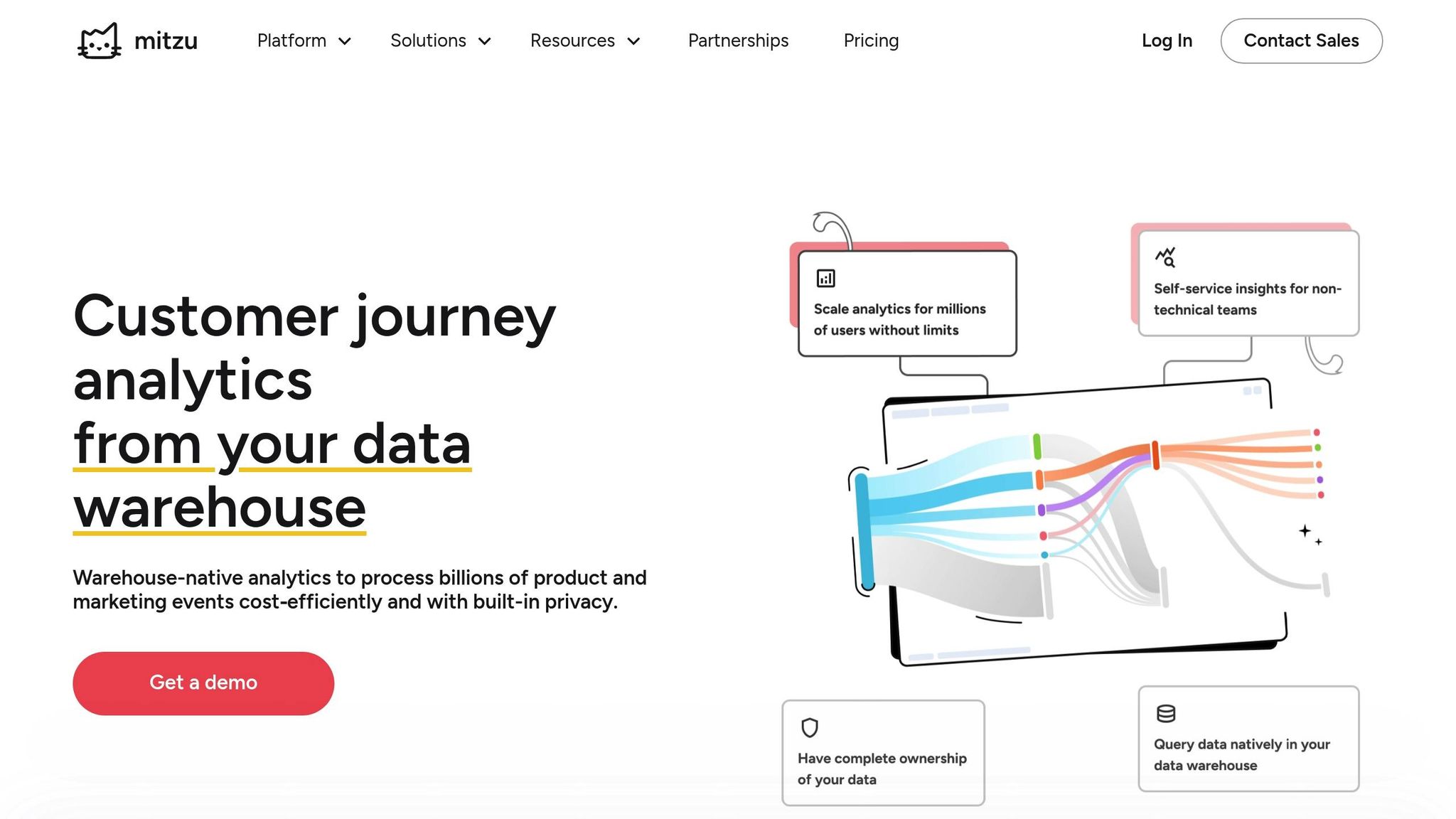
Mitzu allows you to create custom segments directly within your data warehouse using SQL or visual builders. This means you retain complete control over your data without needing to manage complicated ETL processes. If you’re working with platforms like Snowflake, Mitzu handles large datasets seamlessly, avoiding the creation of vendor-managed data silos. Its warehouse-native approach ensures that marketing actions are immediate and driven by the most up-to-date data.
Google Analytics 4 (GA4)

GA4 provides free predictive segmentation, making it a great fit for small and mid-sized businesses. It includes built-in predictive audiences that can estimate purchase probability, churn likelihood, and predicted revenue. These segments integrate effortlessly with Google Ads, enabling quick activation for paid campaigns. However, GA4’s segmentation capabilities are somewhat limited – it allows only four conditions per segment and focuses on users in the 90th percentile of purchase probability.
Mixpanel
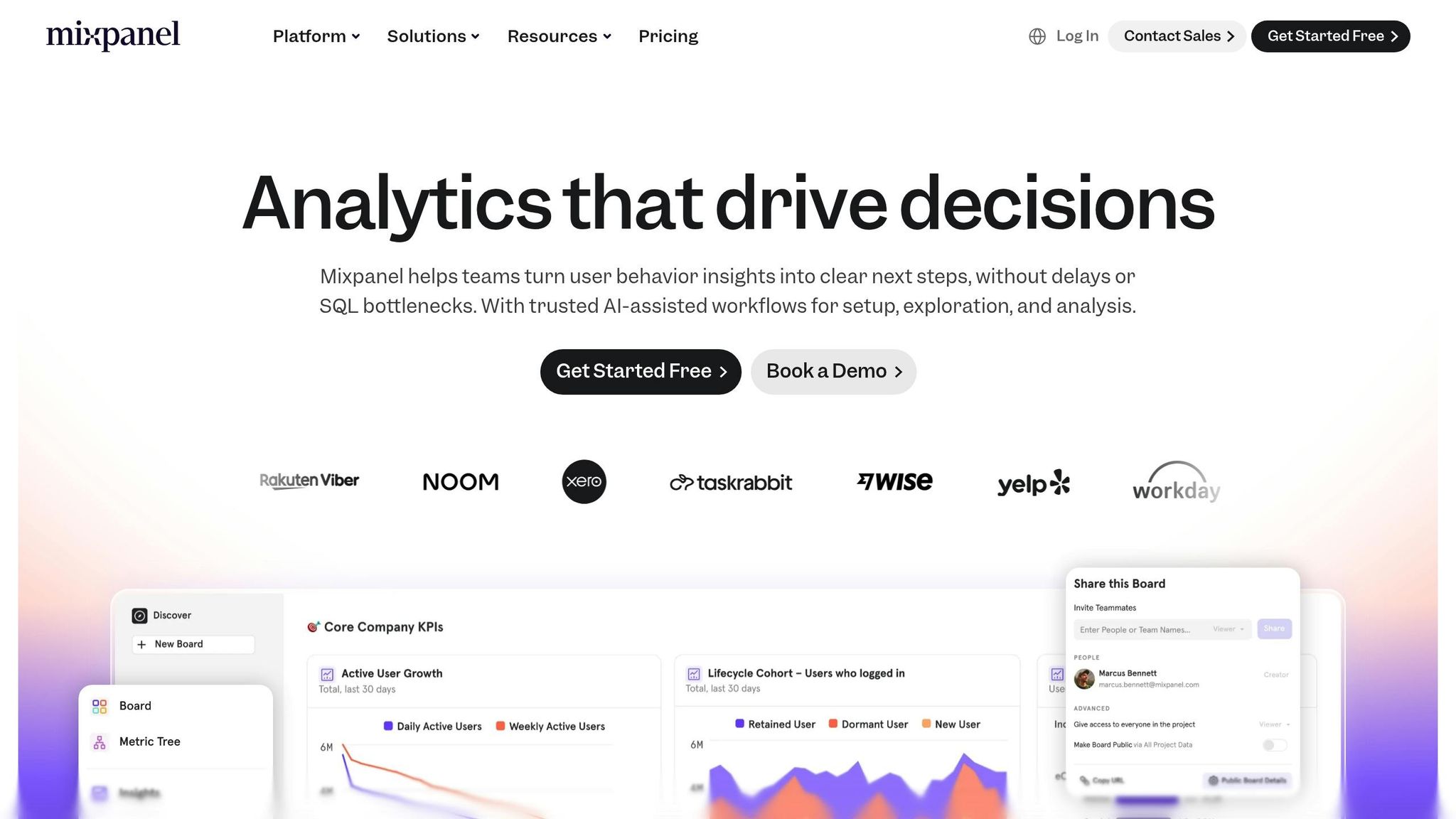
Mixpanel shines in real-time behavioral segmentation, using dynamic cohorts that update as user behaviors evolve. Its retroactive analysis feature lets you study past cohort behaviors without waiting for new data collection – perfect for teams running frequent experiments. Mixpanel also supports unlimited behavioral segments with flexible AND/OR logic, giving marketers and product teams the tools for instant decision-making. That said, pricing can become a challenge for smaller businesses as data volumes grow.
Amplitude
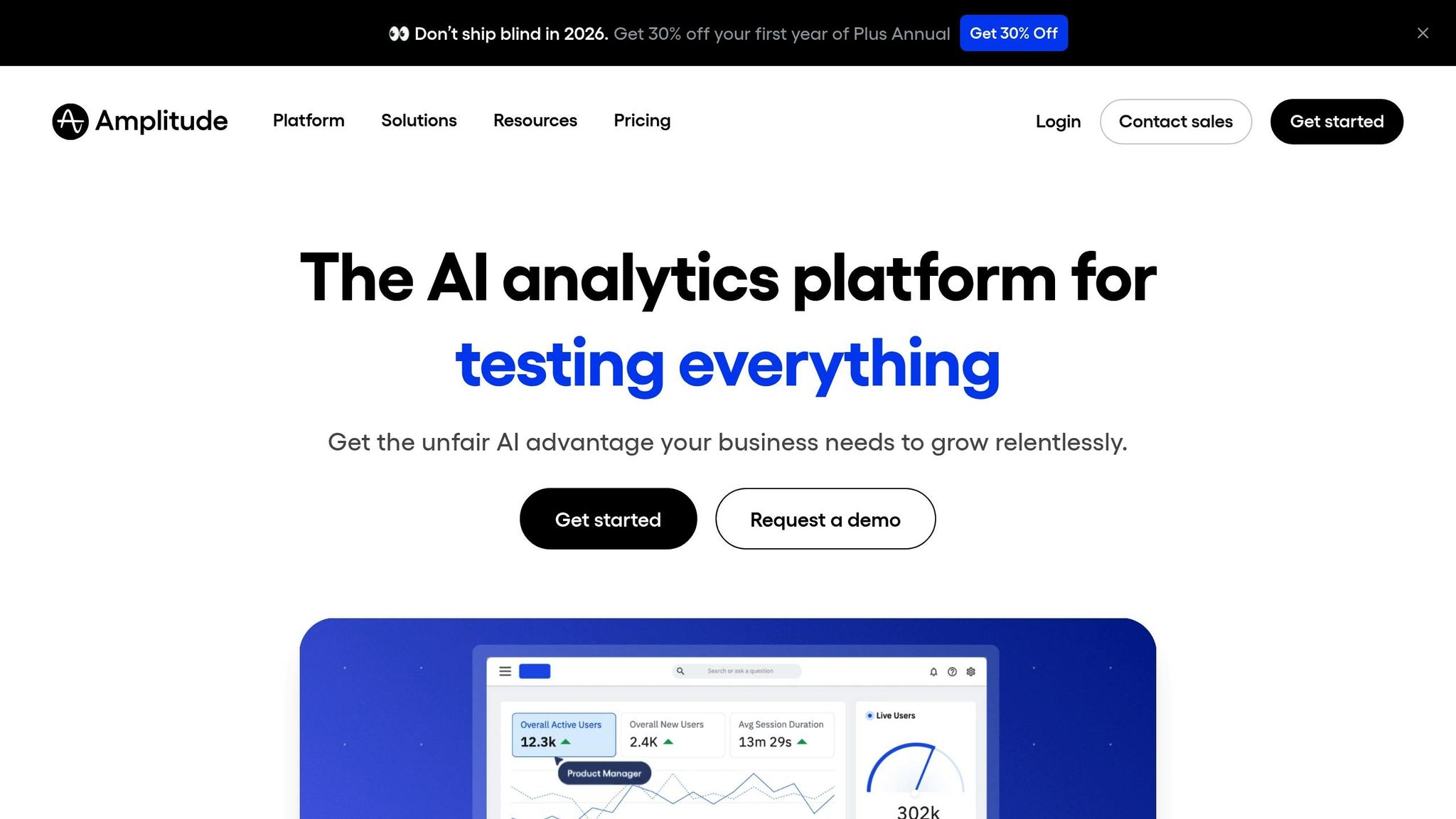
Amplitude uses deep learning models to power predictive cohorting and lifecycle analysis. It examines the top 25 events, user properties, and activity sequences from the latest 128 events to assign probability scores. These predictions are updated regularly, keeping segments fresh and actionable. Its Amplitude Activation feature syncs cohort data in real time, updating every minute for tools like Braze or Facebook Ads. For example, in 2024, Box’s marketing team, led by Tess Mercer, achieved a 124% higher click-through rate and a 102% higher conversion rate using Amplitude’s Predictive Audiences compared to standard SEM campaigns. Amplitude offers a free plan for up to 10,000 monthly tracked users, but larger datasets (100,000+ monthly active users) are recommended for optimal accuracy.
Saras Pulse
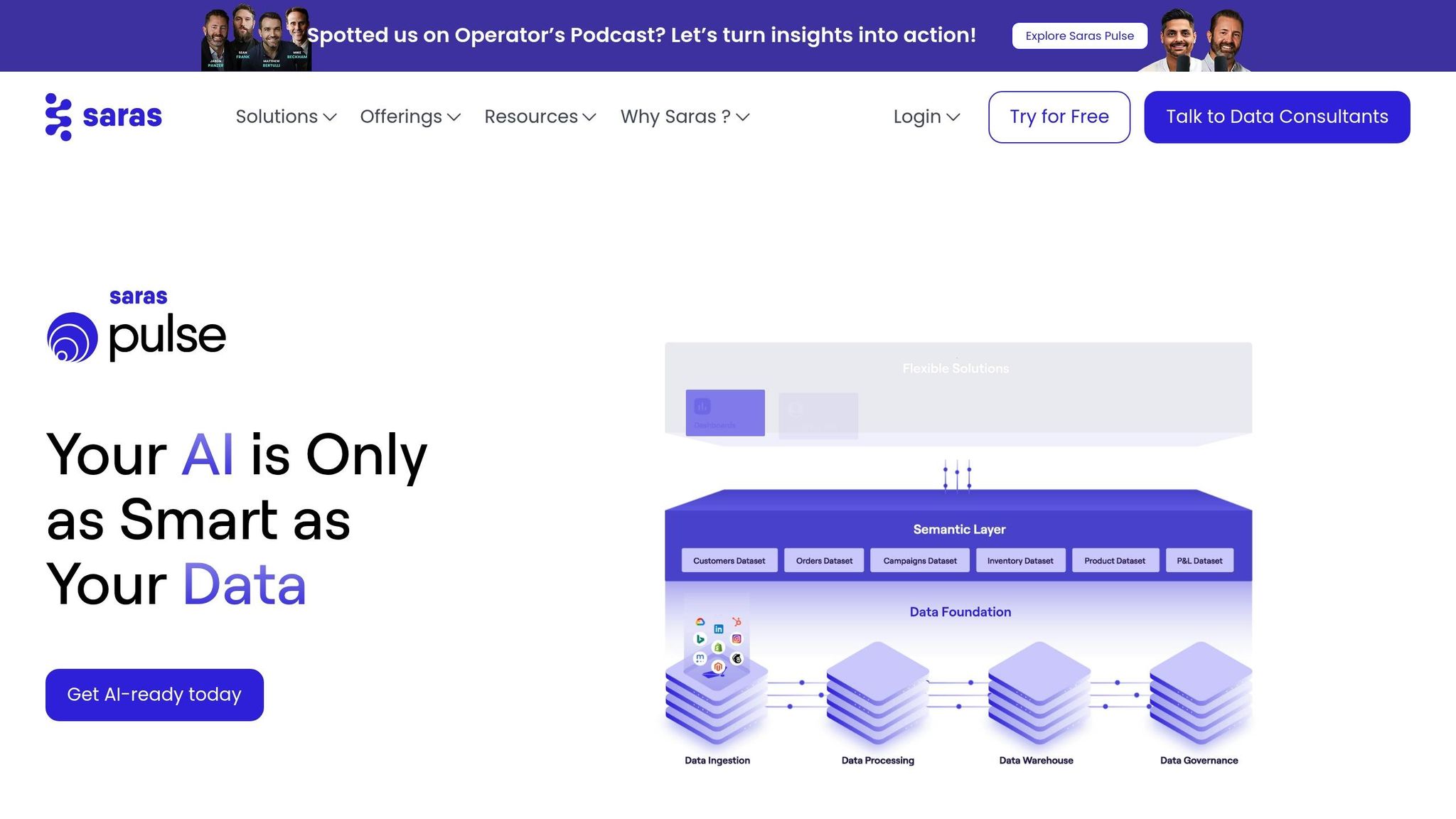
Saras Pulse leverages AI to deliver unified customer profiles, lifetime value metrics, and churn forecasts. These tools keep audience profiles up to date, allowing marketers to respond quickly to shifts in behavior across activation channels.
Tool Comparison
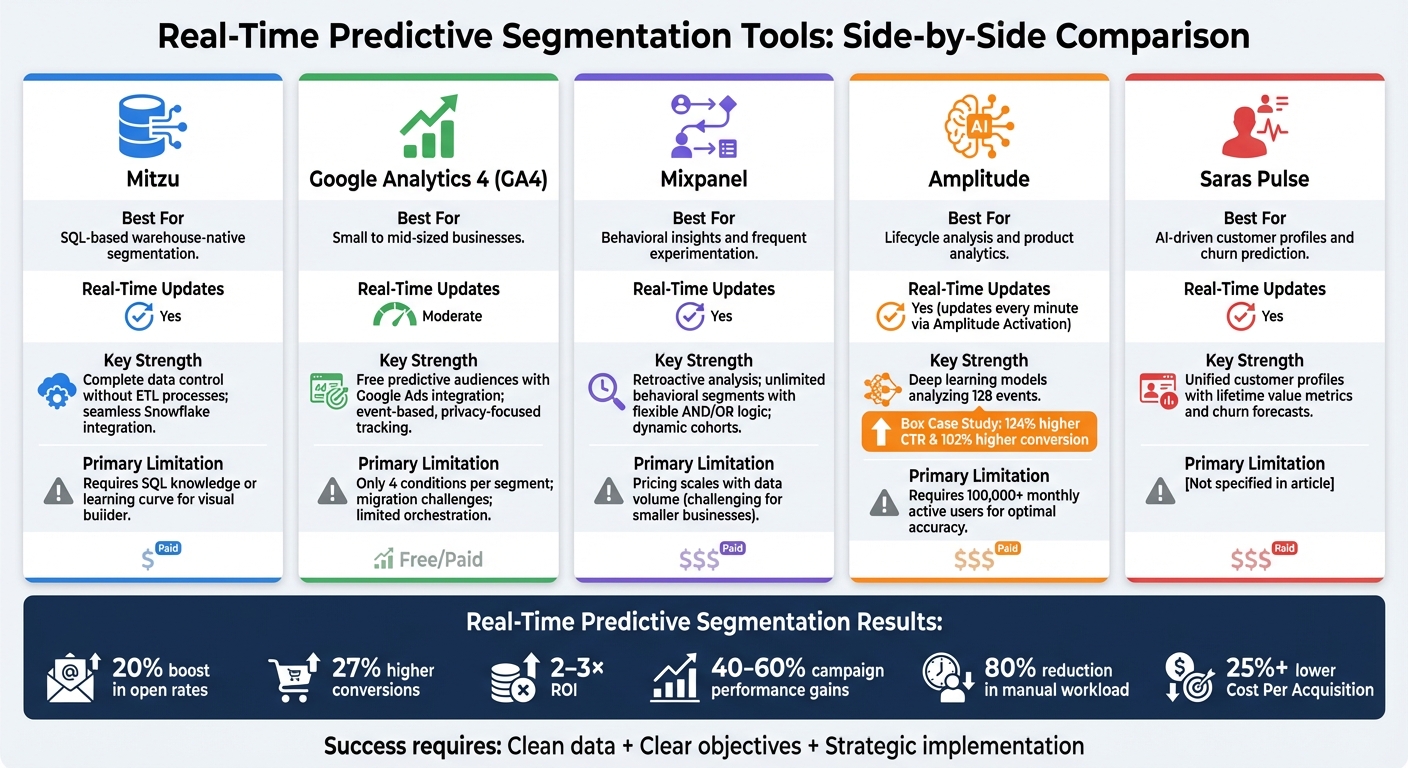
Real-Time Predictive Segmentation Tools Comparison: Features, Strengths & Limitations
Here’s a quick look at how the tools stack up, making it easier to weigh their strengths and weaknesses. This breakdown focuses on tools that support actionable, real-time, data-driven segmentation strategies.
Comparison Table
| Tool | Best For | Real-Time Updates | Key Strength | Primary Limitation |
|---|---|---|---|---|
| Google Analytics 4 | Small to mid-sized businesses | Moderate | Event-based, privacy-focused tracking with predictive metrics | Migration challenges and limited orchestration |
| Mixpanel | Behavioral insights | Yes | Powerful analytics for deep behavioral segmentation | No major limitations noted |
| Amplitude | Lifecycle analysis and product analytics | Yes | Detailed insights into user engagement and product performance | No major limitations noted |
This table provides a snapshot to help you quickly evaluate which tool aligns with your needs.
Conclusion
Real-time predictive segmentation has become a must-have for businesses navigating today’s fast-paced market. Why? Because it enables companies to pinpoint high-value customers early, keep at-risk users engaged, and capitalize on fleeting opportunities. The results? A 20% boost in open rates, 27% higher conversions, and a 2–3× ROI – all backed by data.
The tools we’ve discussed – Google Analytics 4, Mixpanel, and Amplitude – each bring something unique to the table, from event tracking to in-depth behavioral insights. But here’s the catch: tools alone won’t get you there. Clean, reliable data, clear business objectives, and a well-thought-out strategy are what turn insights into action. That’s where a data-driven mindset becomes the game changer.
To turn these insights into tangible growth, partnering with the right experts is crucial. Growth-onomics combines cutting-edge tools with actionable strategies through services like Data Analytics, Customer Journey Mapping, and Performance Marketing. By focusing on first-party data and proven techniques, they ensure predictive models deliver real business results – not just flashy reports.
"AI doesn’t just need lots of good data, it needs fresh, relevant, and context-rich data – in an instant." – Megan DeGruttola, Twilio
If you’re ready to use AI-driven precision to uncover hidden patterns and unlock growth, check out how Growth-onomics can help you craft a segmentation strategy that delivers results.
FAQs
How does real-time predictive segmentation help increase conversion rates?
Real-time predictive segmentation lets marketers fine-tune their targeting by focusing on customers’ current behaviors, preferences, and intentions. Unlike static segmentation, which relies on old or generalized data, this method constantly updates customer groups as new data rolls in. The result? Messaging that feels timely and relevant, driving up engagement and effectiveness.
With AI-powered tools, businesses can respond instantly to customer actions, delivering campaigns that feel personal and well-timed. This approach doesn’t just enhance the customer experience – it also boosts key metrics like open rates, click-through rates, and, most importantly, conversions. By shifting from reactive to proactive marketing, real-time predictive segmentation helps brands achieve better results while building stronger, more meaningful connections with their audience.
What should I look for when selecting a tool for real-time predictive segmentation?
When selecting a tool for real-time predictive segmentation, there are a few critical factors to keep in mind to make sure it aligns with your goals. First, assess whether the tool can process real-time data and provide precise predictive insights. This capability is essential for responding quickly to shifts in customer behavior.
Next, evaluate how seamlessly the tool integrates with your current systems and platforms. A smooth integration process can save time and reduce potential headaches during implementation.
Another key consideration is data privacy and security. If your business manages sensitive customer information or operates under strict compliance standards, robust security measures are a must.
Lastly, think about the cost and scalability of the tool. It’s important to ensure it fits within your budget and can expand as your business grows. Keeping these factors in mind will help you choose a solution that supports effective, long-term marketing strategies.
What makes Growth-onomics’ real-time segmentation approach unique?
Growth-onomics steps up the game in customer segmentation by leveraging AI-powered predictive analytics to create dynamic, real-time customer groups. Unlike older methods that depend on static lists or outdated demographic info, Growth-onomics processes live data continuously. This means businesses get timely, precise insights, allowing their marketing strategies to adjust instantly as customer behaviors and preferences shift.
What makes their approach even more powerful is the use of predictive analytics to forecast future customer actions. This helps businesses spot high-value opportunities or potential risks before they happen. By combining real-time data with forward-thinking insights, Growth-onomics empowers businesses to run personalized, flexible marketing campaigns that boost engagement and drive growth.