
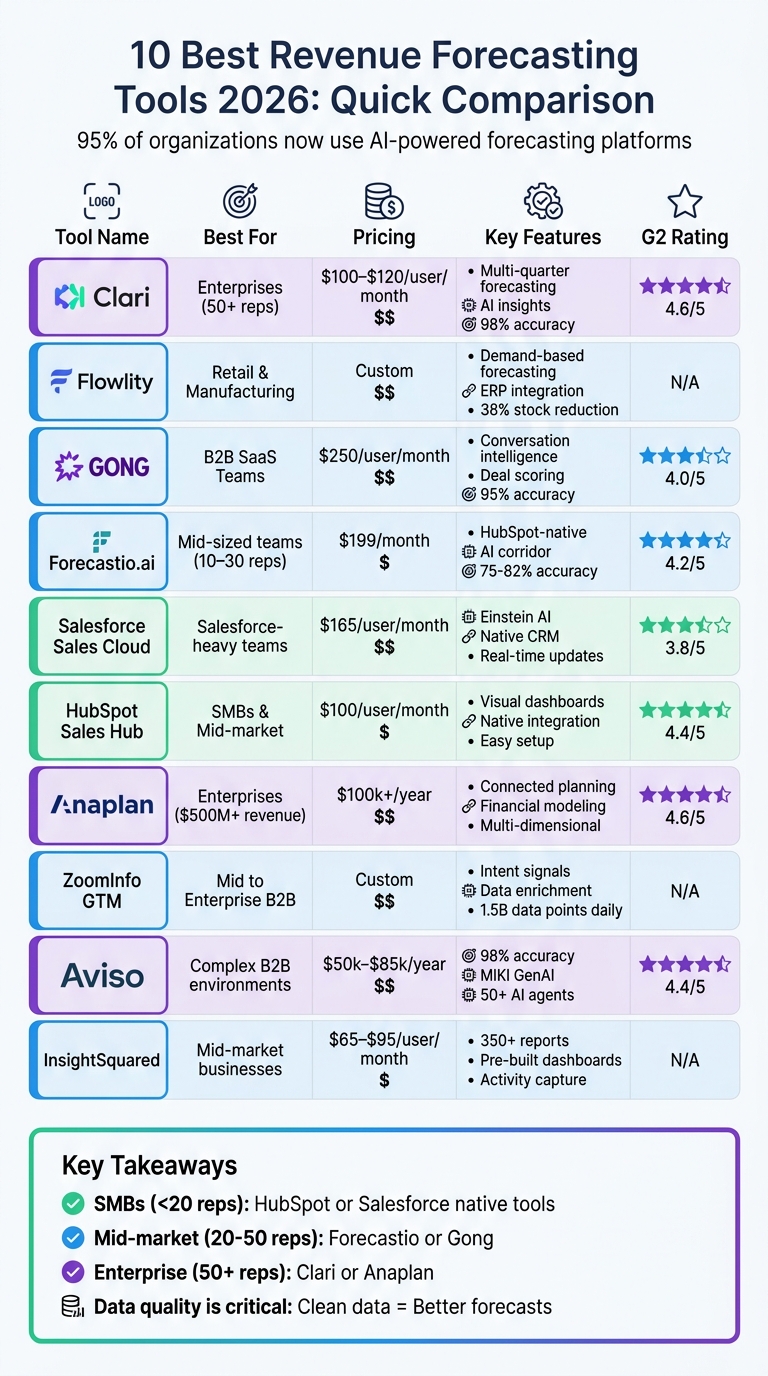
Revenue forecasting tools in 2026 are driven by AI, offering improved accuracy and insights over traditional methods. With 95% of organizations using these platforms, businesses are targeting better predictions and data-driven decisions. Here’s a quick rundown of the top tools:
- Clari: Ideal for enterprises with complex sales; focuses on multi-quarter forecasting and AI-driven insights. Pricing starts at $100–$120/user/month.
- Flowlity: Suited for retail and manufacturing, connects demand planning with revenue forecasting. Custom pricing.
- Gong: Combines conversation intelligence with forecasting; pricing starts at $250/user/month.
- Forecastio.ai: Affordable for mid-sized teams; integrates with HubSpot. Pricing begins at $199/month.
- Salesforce Sales Cloud Forecasting: Native to Salesforce, uses Einstein AI for predictions. Pricing starts at $165/user/month.
- HubSpot Sales Hub Forecasting: Best for SMBs and mid-market teams; integrates seamlessly with HubSpot. Starts at $100/user/month.
- Anaplan: Enterprise-level tool for financial modeling and connected planning. Costs exceed $100k annually.
- ZoomInfo GTM Workspace: Focuses on external buying signals and data enrichment. Custom pricing.
- Aviso: Designed for enterprises, offers 98% forecast accuracy. Pricing ranges from $50k–$85k annually.
- InsightSquared: Mid-market tool with advanced analytics and pre-built dashboards. Costs $65–$95/user/month.
These tools cater to different business sizes and needs, from small teams to large enterprises. Accurate data is key to maximizing their potential.
Quick Comparison
| Tool | Best For | Pricing | Key Features | G2 Rating |
|---|---|---|---|---|
| Clari | Enterprises (50+ reps) | $100–$120/user/month | Multi-quarter forecasting, AI insights | 4.6/5 |
| Flowlity | Retail, manufacturing | Custom | Demand-based forecasting, ERP integration | N/A |
| Gong | B2B SaaS teams | $250/user/month | Conversation intelligence, deal scoring | 4.0/5 |
| Forecastio.ai | Mid-sized teams (10–30 reps) | $199/month | HubSpot-native, AI-driven insights | 4.2/5 |
| Salesforce Sales Cloud | Salesforce-heavy teams | $165/user/month | Native CRM forecasting, Einstein AI | N/A |
| HubSpot Sales Hub | SMBs, mid-market teams | $100/user/month | Visual dashboards, native integration | 4.4/5 |
| Anaplan | Enterprises ($500M+ revenue) | $100k+/year | Financial modeling, connected planning | 4.6/5 |
| ZoomInfo GTM Workspace | Mid to enterprise B2B teams | Custom | Data enrichment, intent signals | N/A |
| Aviso | Complex B2B environments | $50k–$85k annually | AI predictions, 98% accuracy | 4.4/5 |
| InsightSquared | Mid-market businesses | $65–$95/user/month | Advanced analytics, pre-built reports | N/A |
Choose based on your team size, CRM system, and forecasting complexity. Start with clean, accurate data to get the most out of these tools.
Revenue Forecasting Tools 2026: Pricing and Features Comparison
1. Clari
Best for Specific Use Cases
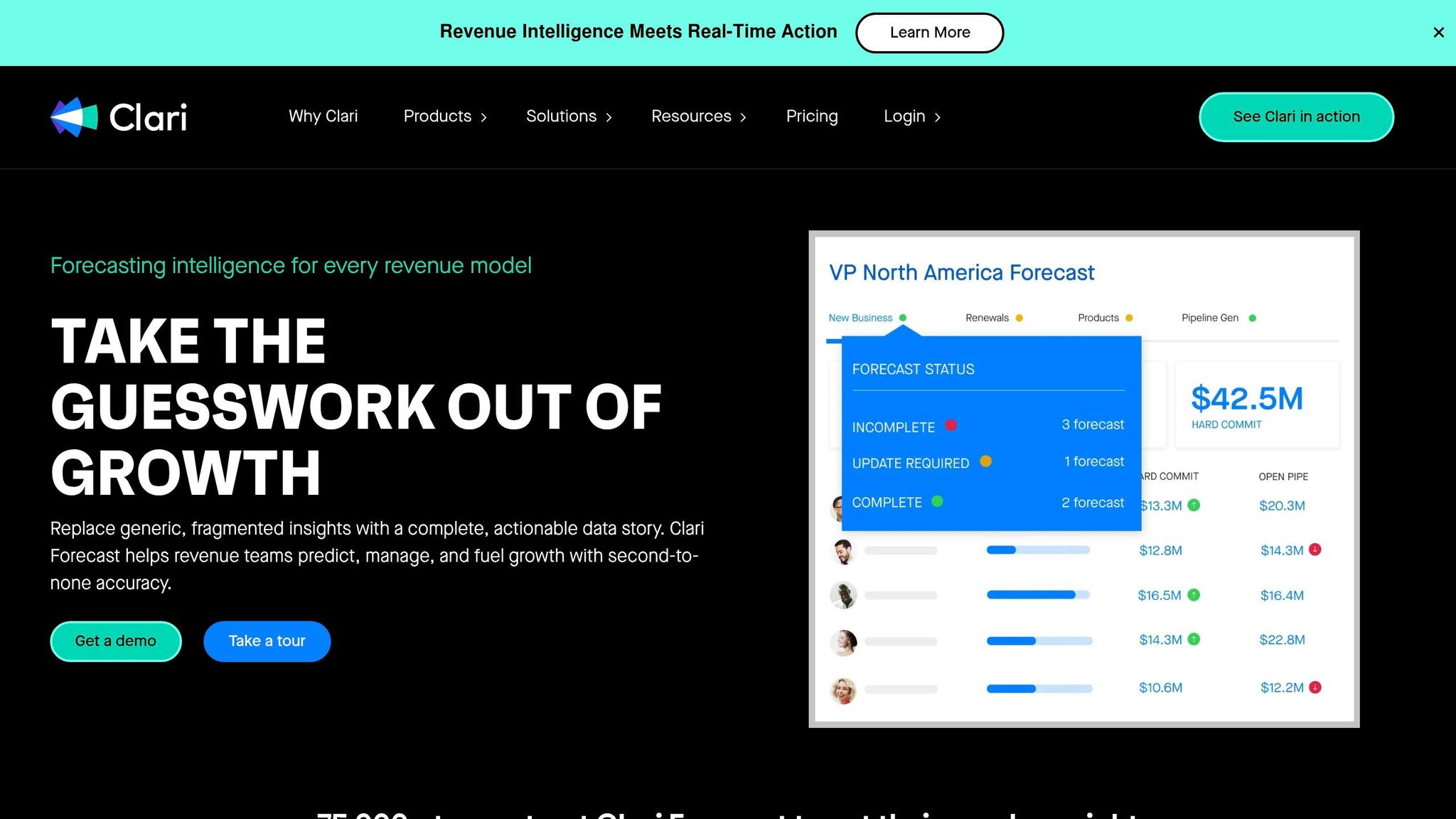
Clari is designed for enterprises and mid-market organizations with 50 or more sales reps managing intricate revenue streams. If your business operates on a B2B SaaS model with subscription-based or consumption-based revenue, Clari is tailored to fit those needs. However, it does require a dedicated Revenue Operations (RevOps) team, as maintaining the platform demands about 10–15 hours of administrative work weekly. This makes it less practical for smaller teams that lack the necessary infrastructure.
For businesses needing multi-quarter forecasting across various segments, regions, and product lines, Clari delivers essential tools. For instance, SentinelOne achieved an impressive 98% forecast accuracy by the second week of the quarter using Clari’s AI-driven insights and historical deal data. Similarly, Databricks used the platform’s scenario modeling and deal prioritization tools to reduce revenue leakage and close 169% more slipped deals. These examples highlight Clari’s ability to enhance revenue operations and forecasting precision.
AI-Driven Features
Clari’s AI capabilities analyze historical data alongside real-time activity signals – such as scheduled meetings, email exchanges, and stakeholder involvement – to assign deal health scores. These scores identify at-risk opportunities before sales reps even log them manually. The platform automatically gathers data from CRM systems, emails, and calendar events, streamlining the process.
One standout feature is its scenario modeling, which allows teams to test predictions under various outcomes – such as best case, commit, and upside scenarios – revealing how pipeline changes could impact overall results. Additionally, automated forecast roll-ups provide a clear view across business units, regions, and product lines, offering insights from executive dashboards down to individual deal details.
"We’re on a strong SaaS journey and anticipate significant growth next year. Predictable results with Clari play a big role in our strategy to invest and grow with confidence." – Daniel Carpenter, SVP of Revenue Excellence and Operations at Carbon Black.
Pricing Range
Clari’s core license costs between $100 and $120 per user per month. Adding the Copilot feature, which is priced at $60–$110 per user monthly, brings the total cost to $200–$310+ per user each month. For a 10-user team in the first year, expect to budget $25,000–$40,000 for core functionality or $37,000–$60,000 with Copilot, including implementation fees ranging from $10,000 to $25,000. Keep in mind that annual renewals typically increase by 10%–20%, so it’s wise to negotiate a cap during the initial contract. Volume discounts start at 75 users, with additional price breaks for teams of 150 and 300 users. Implementation timelines usually range from 8 to 16 weeks, depending on the complexity.
Key Integrations
Clari integrates seamlessly with Salesforce and supports Microsoft Dynamics, HubSpot, and Groove. The platform boasts a 4.6/5 rating on G2 from over 5,500 reviews. Users often highlight its robust pipeline inspection features, though they note the significant RevOps effort required to maintain it.
sbb-itb-2ec70df
2. Flowlity
Best for Specific Use Cases
Flowlity is designed for businesses in retail, manufacturing, and distribution, connecting operational demand planning with revenue forecasting and SEO content strategy. It translates SKU-level demand into financial projections, making it especially useful for companies grappling with stockouts.
For example, in May 2026, Plum Living, a home decor company, used Flowlity’s AI-powered buffers to reduce stock levels by 38% while avoiding hidden stockouts.
AI-Driven Features
Flowlity takes a demand-focused approach, using advanced AI techniques to improve forecast accuracy. Its probabilistic forecasting generates best-case, worst-case, and mid-range scenarios, helping businesses better understand revenue uncertainties. The platform automatically cleans historical data and identifies anomalies in ERP systems, ensuring forecasts are built on trustworthy information.
With strategic scenario simulations, planners can evaluate the effects of factors like promotions or supply chain disruptions on future revenue. Additionally, Flowlity analyzes patterns across thousands of SKUs at once, counteracting the human bias that can affect manual forecasting. By processing raw data into actionable insights, Flowlity equips businesses with a more reliable forecasting tool.
Pricing Range
Flowlity offers a free trial and provides custom enterprise pricing through consultations. While exact pricing in USD isn’t publicly available, businesses can request a demo to receive tailored quotes.
Key Integrations
Flowlity primarily integrates with ERP systems to access historical sales data, product hierarchies, and transaction records. This ERP-focused approach gives businesses an operational perspective on future revenue by analyzing demand across products, SKUs, and locations. Unlike CRM-centric tools, which focus on sales pipelines, Flowlity emphasizes a broader view of demand and inventory.
3. Gong
Best for Specific Use Cases
Gong is a standout choice for sales teams that thrive on conversations – whether through recorded calls, video conferences, or email exchanges. This makes it especially appealing to B2B SaaS companies aiming to merge pipeline visibility with conversation insights. If you’re already using Gong’s robust conversation intelligence, its forecasting tools can be a strong addition. However, new users should be prepared for a significant investment, with annual contracts ranging from $40,000 to $120,000. Some mid-market companies even pair Gong with other tools to address their specific forecasting needs. By leaning into its niche strengths, Gong uses advanced AI to refine forecast accuracy, blending conversation intelligence with forecasting to improve revenue predictions.
AI-Driven Features
Gong’s AI doesn’t just analyze what’s in your CRM – it goes deeper. It reviews call recordings, emails, and meetings to gauge deal health using buyer sentiment instead of relying solely on CRM stages. By evaluating behavioral signals and historical trends from both successful and unsuccessful deals, Gong assigns win probability scores and flags potential risks. These risks can include stalled conversations, missing decision-makers, declining engagement, or even competitor mentions – details that are often overlooked in manual CRM updates. With over 300 signals tracked, Gong delivers deal predictions with 20% greater accuracy than CRM-dependent algorithms.
In 2025, Upwork’s RevOps team, led by Director Drew Korab, adopted Gong Forecast and saw their forecast accuracy soar to 95%. They moved away from manual spreadsheets and subjective inputs from sales reps.
"Our forecast accuracy has grown to the point that we’re now at 95%. Gong lets us run a predictable revenue organization, reduce the number of tools in our tech stack, and save tons of time on forecasting".
Pricing Range
When it comes to pricing, Gong typically charges $250 per user per month for its bundled offering, which includes Conversation Intelligence, Engage, and Forecast modules. If you’re adding the Forecast module to Gong Foundations – priced between $1,300 and $1,600 per user annually – it costs an additional $700 per user per year. For larger enterprises, platform fees can surpass $50,000 annually.
Key Integrations
Gong integrates seamlessly with major platforms like Salesforce, HubSpot, and Microsoft Dynamics. It pulls data from emails, calendars, and video conferencing tools to compile a complete record of customer interactions. Thanks to Zapier, Gong can connect with thousands of other apps, enabling teams to send call summaries to Slack or automate follow-up workflows based on deal risks. Implementation typically takes 12–16 weeks, covering tracker setup and team training.
4. Forecastio.ai
Best for Specific Use Cases
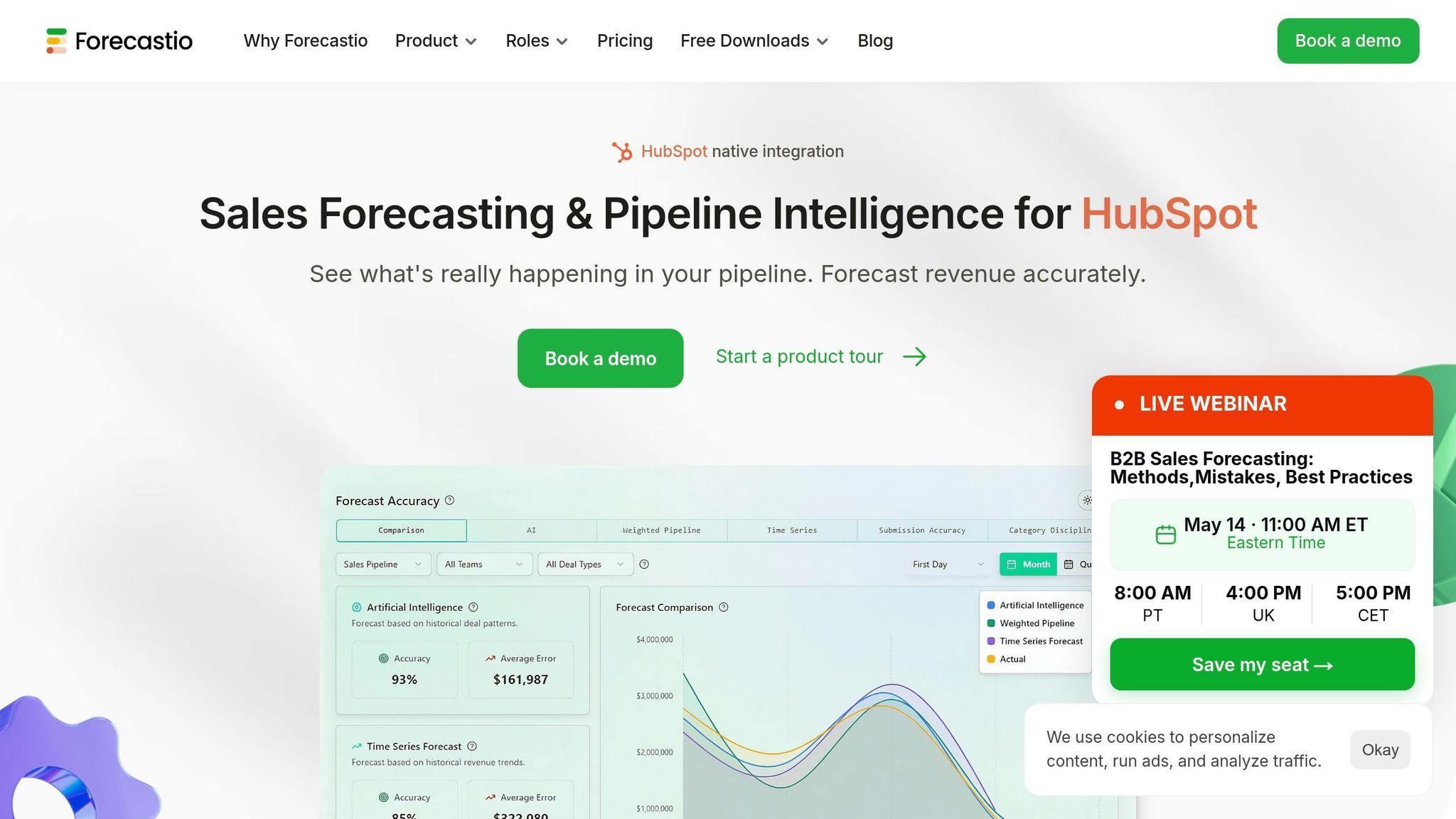
Forecastio.ai is tailored for mid-sized teams (10–30 reps) that need more advanced forecasting capabilities without the complexity or cost of enterprise-level solutions. Specifically designed for HubSpot CRM users, this tool integrates seamlessly, making it a natural fit for those seeking a streamlined, efficient system. It provides about 80% of enterprise-grade forecasting features at just 10% of the cost, aligning with the growing demand for smarter, data-driven forecasting by 2026.
AI-Driven Features
This platform uses a hybrid machine learning model to analyze pipeline data and historical deal trends. One of its standout tools is the "AI forecast corridor", which delivers revenue projections for best-case, commit, and worst-case scenarios automatically. Additional insights include deal velocity, conversion rates, and stage-level probabilities, which help teams spot pipeline issues early. With forecast accuracy ranging between 75–82% and a G2 rating of 4.2/5, Forecastio.ai combines precision with usability.
Pricing Range
Forecastio.ai offers a budget-friendly option for growing teams, with pricing starting at $199 per month when billed annually. It also provides self-serve trials for easier onboarding. Depending on the setup, per-user pricing ranges from $49 to $99 per month. Compared to enterprise tools that can cost tens of thousands annually, this makes Forecastio.ai an affordable choice for expanding teams.
Key Integrations
The platform’s deep, bi-directional synchronization with HubSpot eliminates the hassle of complex data mapping. For teams using Salesforce, it also supports integration to meet their needs. HubSpot-native users can complete setup in just a few days, while other implementations typically take 6–8 weeks.
5. Salesforce Sales Cloud Forecasting
Best for Specific Use Cases
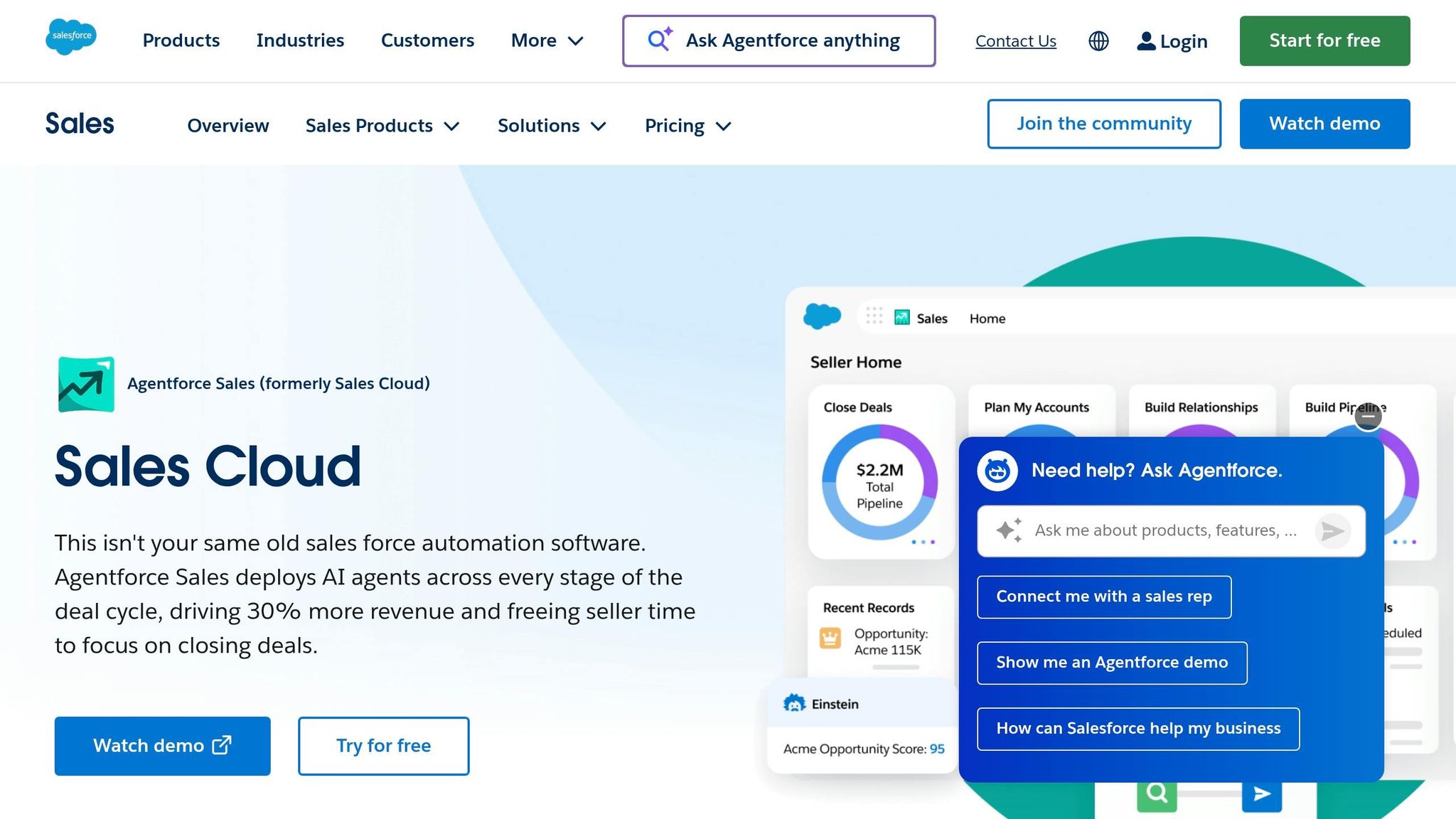
Salesforce Sales Cloud Forecasting is designed for businesses already using the Salesforce ecosystem. It consolidates forecasts across all levels – from individual sales reps to executives – and supports global sales teams with territory management. Unlike third-party tools, it avoids data sync delays by working directly within Salesforce’s infrastructure.
AI-Driven Features
Einstein Forecasting employs machine learning to evaluate historical CRM data, activity trends, and pipeline history, delivering predictions on deal outcomes. Each deal is scored from 1 to 99 based on win/loss records and deal details. One standout feature is its AI explainability, which highlights the factors influencing predictions, allowing managers to review and validate the forecasts. With over 300 signals driving its predictions, Einstein AI claims to be 20% more precise than typical CRM-based forecasting methods.
The newer Agentforce Sales layer adds AI agents that pinpoint pipeline risks and analyze historical trends to refine future forecasts. However, these tools depend heavily on data quality. Poor data is a common challenge, with 39% of sales reps citing it as an obstacle and 63% of CRM implementations failing due to incomplete data.
Pricing Range
The Enterprise Edition starts at $165 per user per month (billed annually) and includes standard forecasting tools. For $300 per user per month, the Unlimited Edition typically adds Einstein AI features. AI add-ons, such as Einstein Forecasting or Revenue Cloud, range from $50 to $220 per user per month. Another option, Einstein Conversation Insights, costs approximately $125 per user per month. On G2, Einstein Forecasting has a 3.8 out of 5 rating.
Key Integrations
Being a native Salesforce tool, it integrates seamlessly with the broader Salesforce ecosystem. This includes Slack for instant deal notifications and ERP systems for synchronized financial planning. Unlike external tools that rely on periodic data syncing, Salesforce Sales Cloud Forecasting uses live CRM data, reducing delays and errors. However, enterprise-level deployments typically take 16 to 24 weeks and often require extensive involvement from Salesforce administrators and data cleanup efforts.
Next, we’ll take a closer look at HubSpot Sales Hub Forecasting, which caters to teams looking for a solution outside of the Salesforce ecosystem.
6. HubSpot Sales Hub Forecasting
Best for Specific Use Cases
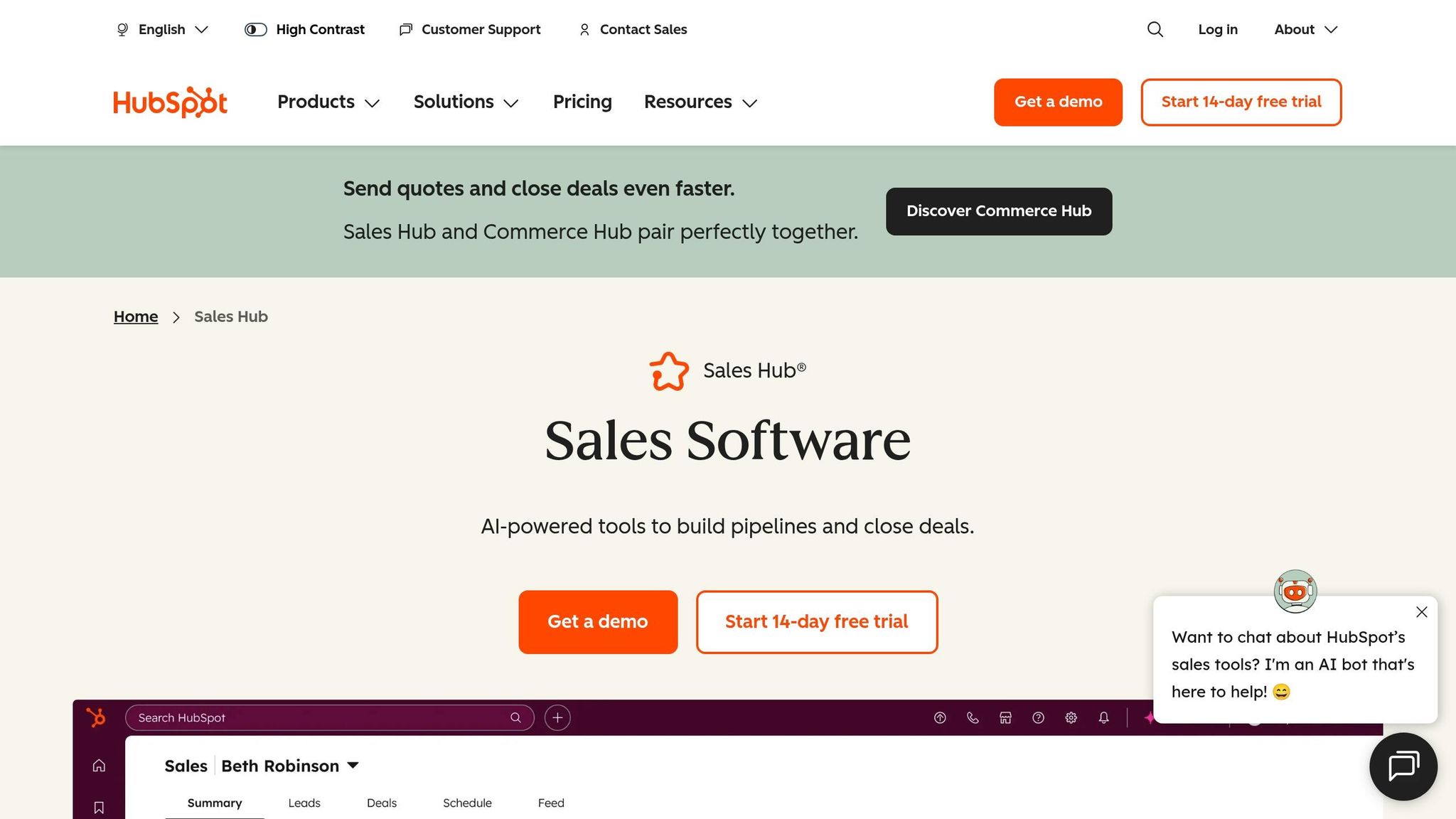
HubSpot Sales Hub Forecasting is tailored for small to mid-sized businesses (SMBs) and mid-market companies generating less than $50 million in annual recurring revenue (ARR). It’s especially suited for teams already immersed in the HubSpot ecosystem. By eliminating the need for third-party data syncing, it simplifies workflows – perfect for teams that lack dedicated Revenue Operations (RevOps) resources.
AI-Driven Features
This platform leverages Breeze AI to deliver predictive deal scoring. It evaluates deal properties, contact engagement, and past activity to assign a probability score for deal closure. Additionally, AI-driven deal summaries and task prioritization tools help sales reps focus on the most promising opportunities. The system keeps an eye on pipeline velocity, identifying bottlenecks that could impact quarterly forecasts before they become an issue. However, the AI requires at least 12 months of closed deal data to train its models effectively.
"I love how I can utilize this tool to forecast and track the progress toward achieving internal goals for our sales team. It also helps us navigate which deals need to be pushed along." – Katie B., G2 Reviewer
Pricing Range
The Sales Hub Professional plan starts at $100 per user per month, while the Enterprise tier is priced at $150 per user per month. For the Enterprise tier, there’s a minimum requirement of 7 seats, along with a $3,500 onboarding fee, making the starting cost about $4,300 per month. Compared to enterprise platforms like Clari – which can run between $25,000 and $40,000 in the first year – HubSpot Sales Hub offers a more budget-friendly option for a 10-user deployment. It holds a solid 4.4 out of 5 rating on G2, based on 5,588 reviews.
Key Integrations
HubSpot Sales Hub Forecasting integrates seamlessly with other HubSpot tools like Smart CRM, Marketing Hub, and Service Hub. This creates a unified, 360-degree view of customer interactions. Unlike API-connected tools, this native integration eliminates delays caused by syncing issues. The mobile app further enhances accessibility, allowing sales leaders to check forecasts and update pipelines on the go. These features make it a strong contender when comparing enterprise-level tools.
Next, we’ll take a closer look at Anaplan, a platform designed for enterprise-level, multi-dimensional financial planning.
7. Anaplan
Best for Specific Use Cases
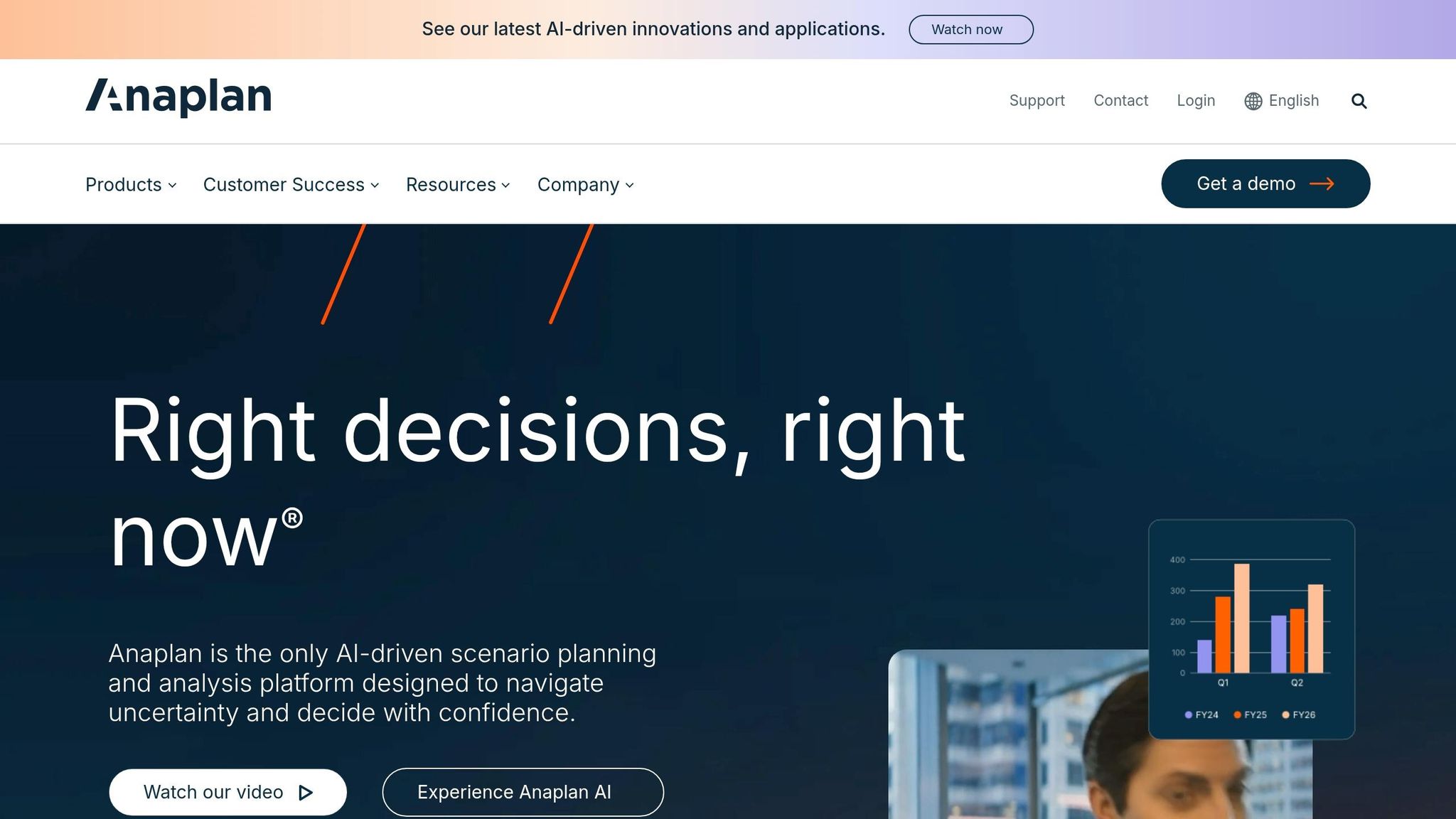
Anaplan is tailored for large enterprises generating over $500 million in annual recurring revenue, seamlessly connecting sales forecasting with broader financial planning across the organization. This integration reflects the growing expectations for revenue forecasting in 2026. Unlike CRM-native tools that prioritize pipeline visibility, Anaplan takes a modeling-first approach. It’s designed to handle complex organizational structures, multi-currency operations, and multi-entity consolidations. With nearly 55% of G2 reviewers identifying as enterprise users, the platform clearly caters to large-scale operations.
Its standout feature is the Connected Planning framework, which links sales forecasts with financial, supply chain, and workforce planning. Carlos Nobre, AB InBev’s Global VP of Finance Planning and Analysis, highlighted this advantage:
"We not only have a financial plan with a number, but we know which actions we need to take to make sure that plan, and that number, actually materialize".
AI-Driven Features
Anaplan employs driver-based forecasting, modeling revenue based on variables like volume, pricing, product mix, regional growth, and churn rates. Its Hyperblock engine powers multidimensional analysis and dynamic "what-if" scenarios. The platform boasts a 9.4 out of 10 rating for its features and has been recognized as a 9X Leader in the 2025 Gartner® Magic Quadrant™ for Financial Planning Software.
With rolling forecasts, static projections are replaced by dynamic models that adapt to shifting market conditions. Enterprise governance tools – such as version control, audit workflows, and role-based access – enhance the connected planning framework and ensure regulatory compliance. However, the platform’s complexity often demands skilled model builders, making the learning curve steep.
Pricing Range
The median annual cost for Anaplan is $102,032, with entry-level contracts typically starting between $20,000 and $50,000 per year. For enterprise deployments, costs often exceed $100,000 annually. Implementation takes about 5 to 7 months, with companies typically seeing ROI within 17 months. The platform holds a 4.6 out of 5 rating on G2, based on 452 reviews.
Key Integrations
Anaplan supports 50 to 60 native connectors, directly integrating with tools like Salesforce for CRM data and various ERP systems for financial data. These integrations provide real-time synchronization, eliminating data lags and the need for manual spreadsheet updates. As a result, updates to P&L statements and revenue plans happen instantly. This efficiency frees up finance teams to focus on strategic scenario modeling rather than tedious manual tasks.
Next, explore how ZoomInfo GTM Workspace transforms revenue intelligence into actionable go-to-market strategies.
8. ZoomInfo GTM Workspace
Best for Specific Use Cases
ZoomInfo GTM Workspace is tailored for mid-market to enterprise B2B teams facing challenges with outdated CRM data – like incorrect contact details or stakeholders changing roles mid-cycle – which can lead to missed forecasts. This tool is especially useful for organizations that incorporate external buying signals, such as web research and content consumption, into their revenue forecasts and data analytics. ZoomInfo processes a staggering 1.5 billion data points daily, covering 500 million contacts and 100 million companies. This enables teams to spot hidden deal risks in real time and generate twice as many opportunities through AI-powered workflows. Its emphasis on external signals truly sets it apart, paving the way for its advanced AI features.
AI-Driven Features
At the heart of ZoomInfo’s AI capabilities is the GTM Context Graph. This intelligence layer connects CRM records, conversation insights, and buyer intent signals to map the factors influencing deal outcomes [31,3]. The Copilot AI assistant simplifies tasks by automating updates and flagging at-risk deals based on historical trends. Unlike traditional pipeline forecasting, ZoomInfo employs predictive deal scoring, which evaluates close probabilities using real-time metrics like engagement, buyer fit, and deal velocity [28,30].
In 2025, Snowflake leveraged ZoomInfo’s data to build its Account Propensity Scoring (APS) model. This model uses over 70 data fields, with a significant portion derived from ZoomInfo’s technographic and firmographic insights. David Gojo, Sales Data Science Manager at Snowflake, shared:
"We use enriched data to understand the universe of accounts worldwide. Once our APS system produces a score, we put it in front of field operations leads so they can allocate those accounts as efficiently as possible."
The results were impressive: 25% higher customer engagement, double the new customer conversion rates, and a 90% increase in opportunity open rates.
Pricing Range
Pricing is custom and depends on the number of seats and specific data needs. A free trial is available for interested users [7,28,30].
Key Integrations
ZoomInfo GTM Workspace seamlessly integrates with popular platforms such as Salesforce and HubSpot through native, bidirectional synchronization. It also connects with Microsoft Dynamics and Outreach. These integrations automatically update CRM records with verified contact and company data, addressing common data issues that lead to forecasting errors. Plus, the platform meets GDPR, CCPA, and SOC 2 Type II compliance standards and was recognized as a Leader in Intent Data Providers for B2B by Forrester Wave in Q1 2025.
Next, learn how Aviso uses AI to achieve predictive forecasting with unmatched accuracy.
9. Aviso
Best for Specific Use Cases
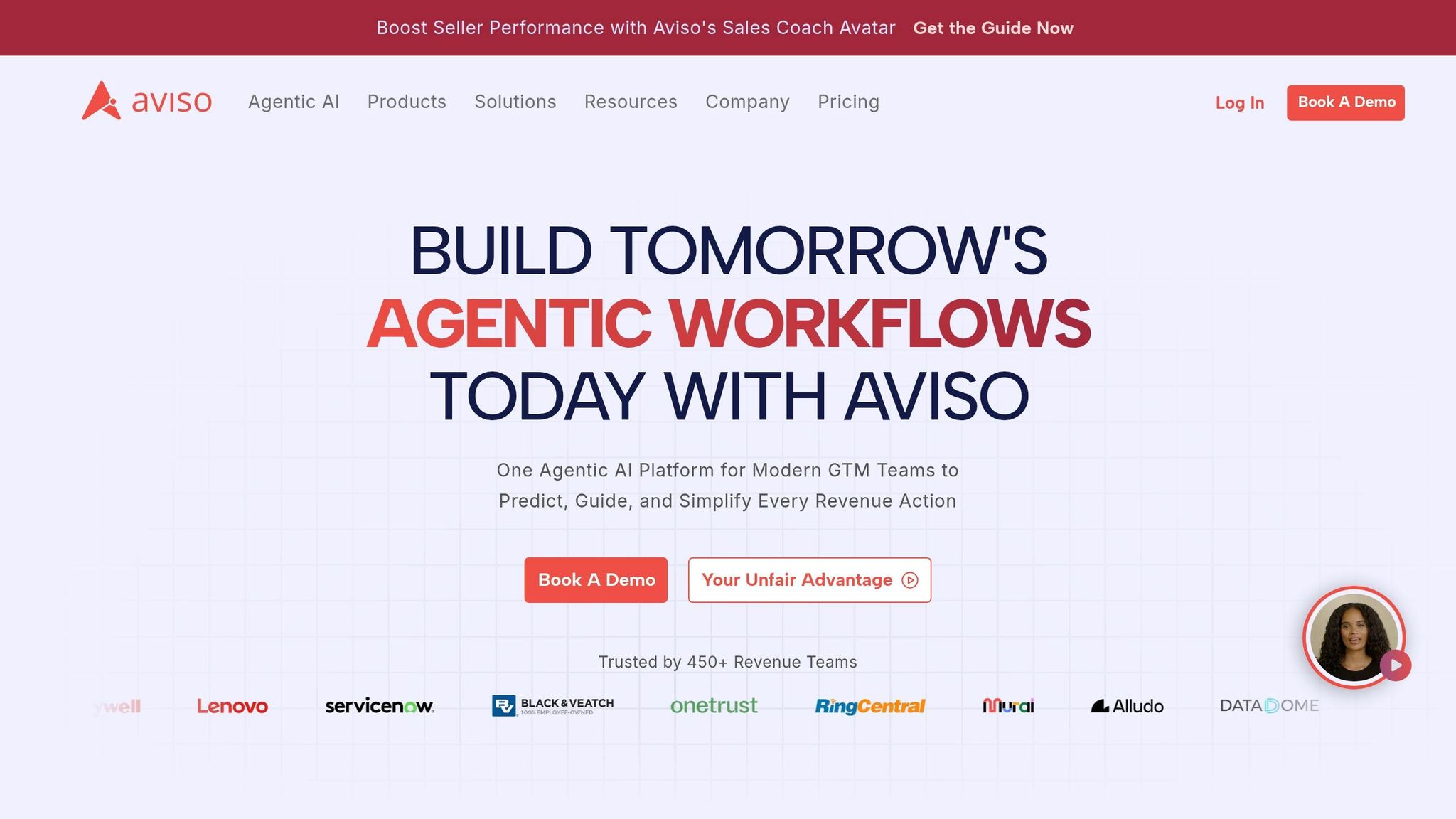
Aviso is designed for enterprise sales teams operating in complex B2B environments. It shines when managing multiple product lines and coordinating across various engagement channels. This platform is particularly valuable for businesses juggling both traditional Annual Contract Value (ACV) contracts and usage-based pricing models. Aviso’s strength lies in its ability to consolidate data from multiple CRM systems and data lakes, ensuring consistent and actionable insights across large, distributed organizations. As Sandeep Seshadri, an Enterprise Account Manager, puts it:
"Aviso is the only platform that can help us deliver accurate revenue forecasts for both our ACV business and usage-based pricing models".
AI-Driven Features
Aviso’s MIKI GenAI assistant delivers real-time guidance, enabling users to query deal statuses and monitor account usage effortlessly. Its proprietary WinScore system leverages multi-channel engagement, conversation intelligence, and historical data to predict the likelihood of deal closures. With over 50 specialized AI agents and role-specific avatars, the platform automates tasks to enhance efficiency. Aviso claims forecasting accuracy rates of up to 98%, with customers reporting impressive results: a 36% boost in net new revenue per rep, a 23% reduction in sales cycle time, and a 16% increase in average deal size. Charles Forsgard, VP of Sales at Honeywell, highlights its value:
"At Honeywell, both [Reps and Managers] get tremendous value from Aviso. They are one of the few companies in the space that understand that if you can just give meaningful insights back to a seller, the seller will put more high quality input into CRM".
Pricing Range
Aviso’s annual contracts typically cost between $50,000 and $85,000, with a median price of approximately $73,662. Per-user pricing for the full platform is estimated at $1,500 to $2,500 annually, while implementation fees can range from $25,000 to $100,000, depending on the complexity of the organization.
Key Integrations
The platform integrates seamlessly with Salesforce through bidirectional sync and connects with Microsoft Dynamics, financial systems, email and meeting platforms, and other essential business tools. It also offers a mobile app, allowing managers to conduct forecast calls and review deals on the go with real-time updates.
Next, see how InsightSquared completes our list with an analytics-driven forecasting approach.
10. InsightSquared
Best for Specific Use Cases
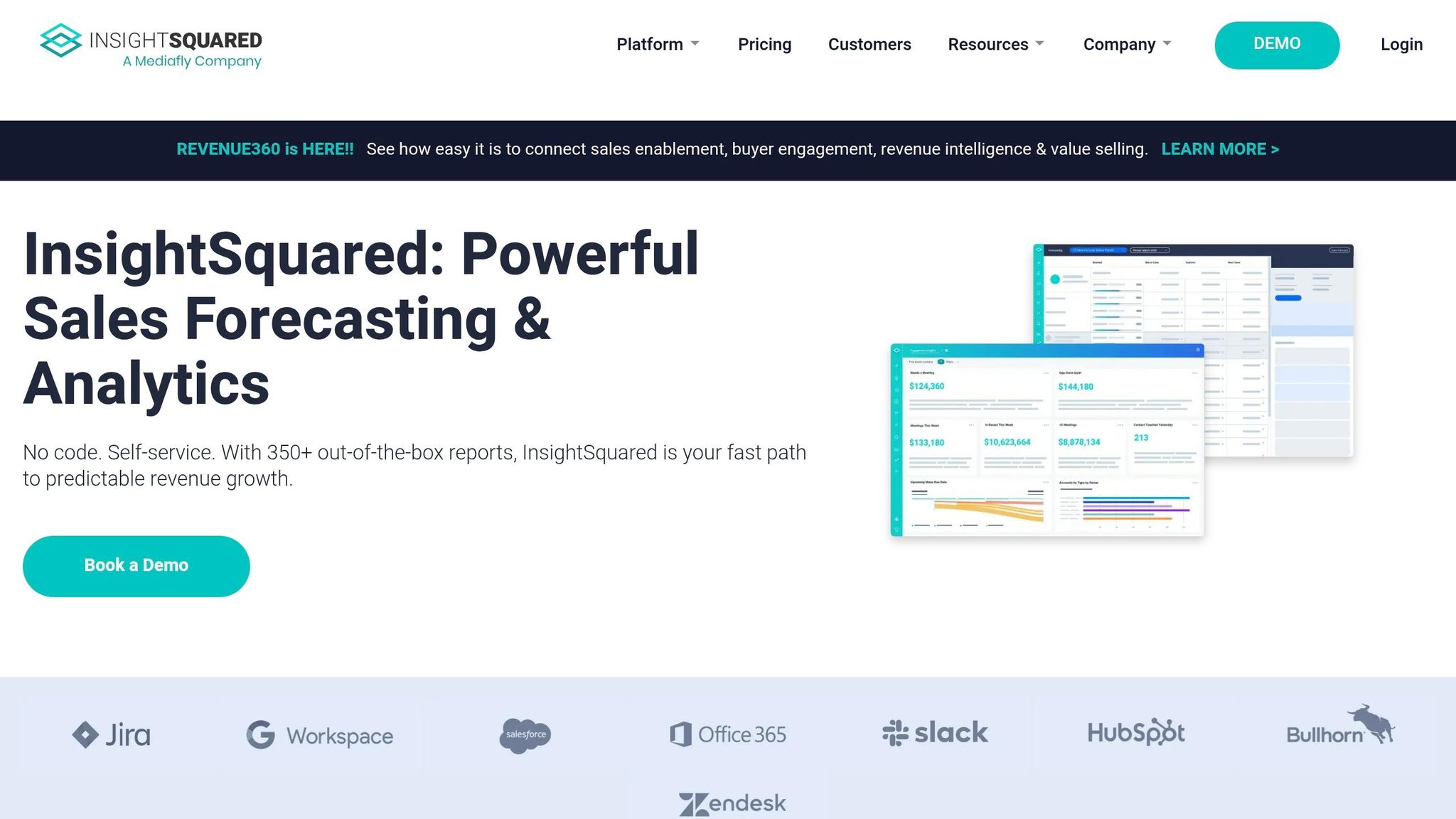
InsightSquared is designed for mid-market and enterprise businesses that need advanced reporting and forecasting dashboards without diving into the complexities of full-scale revenue intelligence. It comes with pre-built dashboards that track essential sales metrics like quota attainment and win rates, giving revenue leaders the tools to quickly analyze historical performance and pipeline trends. By bridging the gap left by basic CRM tools, it strengthens revenue forecasting and provides a clearer picture of sales performance.
AI-Driven Features
This platform combines human input with machine learning to identify risks and highlight opportunities. Features like Confidence-to-Close models and ICP analysis use historical data to score deals, ensuring current opportunities align with past patterns of success. With over 350 ready-to-use reports, InsightSquared makes it easier to turn raw data into actionable insights. Additionally, the platform automates the capture of emails and calendar events into your CRM, reducing manual work and improving data accuracy. These tools provide quick, impactful results without driving up costs.
Pricing Range
Pricing for InsightSquared falls between $65 and $95 per user, per month, according to published benchmarks. This makes it a mid-tier option for companies needing more advanced analytics than basic CRM tools but without the extensive features of higher-end revenue intelligence platforms.
Key Integrations
InsightSquared integrates directly with Salesforce and works seamlessly with HubSpot. These integrations enable the platform to pull data straight from your CRM, creating advanced forecasting dashboards and revenue reports without requiring complicated technical setup. Its automatic activity capture ensures emails and calendar events are logged into your CRM, improving data completeness and enhancing forecasting accuracy. These integrations make it easier for businesses to transform CRM data into actionable insights, aligning perfectly with the goal of improving forecasting precision.
Best RevOps Tools to Replace Spreadsheets in 2026
Feature and Pricing Comparison
When selecting a revenue forecasting tool, it’s all about finding the right balance between features, cost, and complexity. Below is a detailed comparison of 10 tools, highlighting their pricing, key features, integrations, ideal users, and G2 ratings (based on May 2026 data).
| Tool | Pricing | Key Features | Primary Integrations | Best For | G2 Rating |
|---|---|---|---|---|---|
| Clari | $100–$120/user/mo; $200–$310/user/mo with add-ons; $15k–$75k implementation | Enterprise roll-ups, AI-driven pipeline inspection, activity capture | Salesforce, HubSpot, MS Dynamics, Slack | Enterprise teams (50+ reps) needing multi-product or multi-region forecasting | 4.6/5 (5,588 reviews) |
| Flowlity | Custom pricing (enterprise-focused) | Demand-driven forecasting, ERP integration, supply chain alignment | SAP, Oracle, ERP systems | Supply chain and finance teams aligning sales demand with inventory planning | Not widely rated |
| Gong | ~$50/user/mo for its Forecast add-on; requires Foundations at $1,300–$1,600/user/yr | Conversation intelligence, deal health scoring, engagement signal analysis | Salesforce, HubSpot, Email/Calendar | Teams under 100 reps already using Gong for call recording | 4/10 standalone |
| Forecastio.ai | $199/mo (annual plan) | AI forecast corridor, HubSpot-native dashboards, mid-market focus | HubSpot, Salesforce | HubSpot-based mid-market teams (20–50 reps) | Not widely rated |
| Salesforce Sales Cloud Forecasting | $165/user/mo (Enterprise); Einstein included in Unlimited at $300/user/mo | Native CRM forecasting, Einstein AI scoring, real-time updates | Native Salesforce ecosystem | Salesforce-heavy organizations needing zero integration overhead | Not separately rated |
| HubSpot Sales Hub Forecasting | $450/mo for 5 users; Professional starts at $100/seat/mo | Visual pipeline dashboards, easy setup, native CRM integration | Native HubSpot ecosystem | Mid-market teams without dedicated RevOps | 4.4/5 |
| Anaplan | ~$100k+/yr; median buyer spends ~$102,032/yr | Connected planning, ERP integration, enterprise financial modeling | ERP, Salesforce, financial systems | Firms with $500M+ revenue needing sales-to-budget alignment | 4.6/5 (452 reviews) |
| ZoomInfo GTM Workspace | Custom pricing (enterprise-focused) | Intent data enrichment, account propensity scoring, technographic insights | Salesforce, HubSpot, MS Dynamics | Teams prioritizing accounts based on external buying behavior | Not separately rated |
| Aviso | ~$50/user/mo; median buyer spends ~$73,662/yr | Machine learning across 1,000+ data points with 98% claimed accuracy | Salesforce, Email, Calendar | B2B SaaS teams analyzing deal velocity and engagement signals | 4.4/5 (951 reviews) |
| InsightSquared | $65–$95/user/mo | Pre-built dashboards, 350+ reports, confidence-to-close models | Salesforce, HubSpot | Mid-market businesses needing advanced analytics without full revenue intelligence | Not widely rated |
Key Takeaways for Your Forecasting Strategy
Be mindful of hidden costs. Many enterprise tools come with ongoing administrative needs and annual price increases of 10–20% baked into renewal clauses. To avoid surprises, secure a written renewal cap and ensure your team is prepared for platform management.
Data quality is everything. Poor data leads to missed targets. For example, in 2026, Snyk implemented a data enrichment layer for 50 Account Executives, cutting their email bounce rate from 35–40% to under 5%. This change helped drive a 180% increase in AE-sourced pipeline.
Choose a tool that fits your team size.
- SMBs (fewer than 20 reps): Tools like HubSpot Sales Hub or CRM-native options are ideal for their simplicity and affordability.
- Mid-market teams (20–50 reps): Solutions such as Forecastio or Gong Forecast provide AI-driven insights without the complexity of enterprise tools.
- Enterprise teams (50+ reps): Tools like Clari or Anaplan are better suited for handling complex, multi-product, or multi-region forecasting needs, though they come with a higher total cost of ownership.
Conclusion
Choosing the right revenue forecasting tool boils down to three key considerations: your CRM system, the size of your team, and how complex your forecasting needs are. There’s no one-size-fits-all solution here.
For small businesses (teams with fewer than 5 reps), CRM-native tools like HubSpot Sales Hub or Salesforce Sales Cloud Forecasting are ideal. They’re straightforward, budget-friendly, and don’t require a dedicated Revenue Operations team. Mid-market teams (5–50 reps) might find value in AI-powered platforms such as Forecastio.ai or Gong, which automate tedious spreadsheet tasks while staying manageable for smaller operations teams. On the other hand, enterprise-level organizations (50+ reps) typically need more advanced platforms like Clari or Anaplan, capable of handling complex hierarchies, regional data, and multi-dimensional modeling.
Once you’ve identified the right tool for your team, data quality becomes your next priority.
Start by auditing your data. Companies like Snowflake have shown how clean, enriched data can significantly impact results. Their efforts in data enrichment led to double the new customer conversion rates and a 90% increase in opportunity open rates – a clear example of how accurate data drives better forecasts.
After addressing data quality, focus on testing the tool’s functionality. Conduct a two-week pilot using real pipeline data. This will help uncover any integration issues or workflow bottlenecks. Also, be proactive in negotiating renewal caps to avoid unexpected price increases.
While no tool can fix poor data, the right platform can transform high-quality information into actionable insights, giving you a reliable path to hit your revenue targets quarter after quarter.
FAQs
What data do I need before using an AI forecasting tool?
To get the most out of an AI forecasting tool, start by gathering essential data. This includes historical sales or demand figures, information on external factors like market trends and holidays, and current operational data from sources like CRM systems or sales pipelines.
The key is ensuring your data is complete, accurate, and up-to-date. Inconsistent or low-quality data can lead to unreliable predictions. Take the time to clean and organize your data – this helps the AI model detect patterns and trends more effectively.
How do I pick the right tool for my CRM and team size?
The best revenue forecasting tool for your business depends on factors like team size, the complexity of your sales process, and the CRM you use.
- Smaller Teams: If you’re working with a smaller team, tools like HubSpot Forecasting or Salesforce Einstein are great options. They’re straightforward to use, integrate seamlessly with their respective CRMs, and are budget-friendly.
- Large Organizations: Companies managing over $100 million in revenue often need more sophisticated tools. Advanced platforms with highly accurate, customizable models are better suited for handling the complexity at this scale.
- Mid-Sized to Large Teams: For those looking for enhanced data quality and AI-driven insights, platforms like Clari or Prospeo offer powerful features designed to streamline forecasting and improve accuracy.
The right choice will depend on your specific needs, but aligning the tool with your team’s size and sales challenges is key to getting the most out of it.
What hidden costs should I budget for beyond the listed price?
In addition to the listed price, be prepared for costs related to data quality improvements, system integration, ongoing training, and potential upgrades. These expenses are essential to maintaining accurate and reliable forecasts over time.